

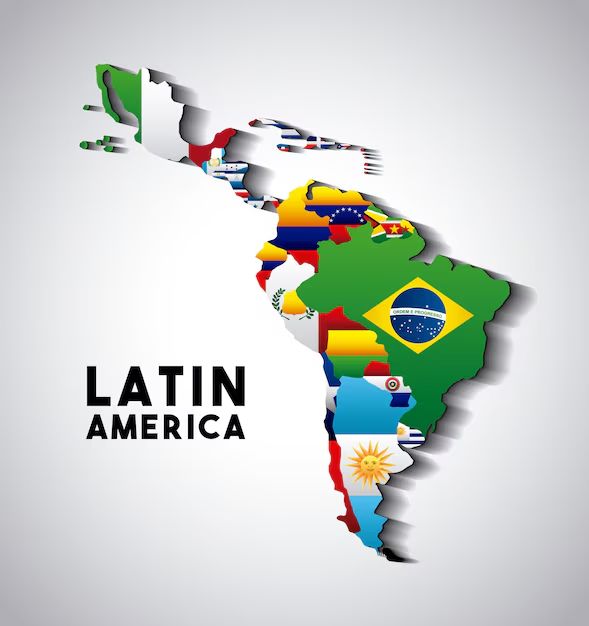
Water Resource Management and Cooperation: South American River Basin Agreements
In today's interconnected world, international relations and cooperation play a crucial role in addressing contemporary issues. One such issue that requires collaboration is water resource management, particularly in South American river basins. These basins, shared by multiple countries, require joint efforts to ensure sustainable and equitable use of water resources. In this article, we will explore the importance of cooperation, discuss the South American river basin agreements, and inspire readers to promote unity in North and South America.
Water, a precious resource: Water is essential for life, economic development, and environmental sustainability. However, the availability of water resources is not evenly distributed, leading to potential conflicts and challenges.
South American river basins: South America boasts several large river basins, including the Amazon, Orinoco, Paraná, and Uruguay. These basins traverse multiple countries, making cooperation crucial for their sustainable management.
The need for cooperation: Effective water resource management requires cooperation among countries sharing the same river basin. Cooperation ensures equitable allocation, prevents conflicts, and fosters sustainable use of water resources.
South American River Basin Agreements: In South America, countries have recognized the importance of cooperation and have established various agreements to manage shared river basins. Examples include the Amazon Cooperation Treaty Organization (ACTO) and the La Plata Basin Agreement.
The Amazon Cooperation Treaty Organization (ACTO): Comprising eight Amazonian countries, ACTO promotes the sustainable development of the Amazon rainforest and river basin. It focuses on biodiversity conservation, sustainable forest management, and the promotion of indigenous rights.
The La Plata Basin Agreement: Argentina, Bolivia, Brazil, Paraguay, and Uruguay established this agreement to ensure the integrated management of the La Plata River basin. It aims to improve water quality, prevent pollution, and mitigate the impacts of natural disasters.
Successful collaboration: These agreements serve as models for successful collaboration in water resource management. They demonstrate the importance of shared goals, open communication, and mutual trust among participating countries.
Challenges and opportunities: While South American river basin agreements have made significant progress, challenges remain. These include conflicting national interests, insufficient funding, and the need for improved infrastructure. However, these challenges also present opportunities for increased cooperation and innovative solutions.
Case study: The Itaipu Dam: The Itaipu Dam, located on the Paraná River, stands as a testament to successful collaboration between Brazil and Paraguay. This joint project has not only generated clean energy but has also strengthened bilateral relations and fostered regional integration.
Transboundary pollution: Pollution knows no borders, and transboundary pollution in South American river basins is a significant concern. Cooperation is key to addressing this issue and developing strategies to prevent pollution and restore water quality.
Climate change and water scarcity: As climate change impacts become more pronounced, water scarcity is expected to increase in certain regions of South America. Joint efforts, such as sharing water resources and implementing efficiency measures, are essential in mitigating the effects of water scarcity.
The role of technology: Technology plays a vital role in water resource management. Remote sensing, data analysis, and modeling tools can provide valuable insights for decision-making and facilitate cooperation among countries.
Promoting North and South America unity: Water resource management is just one aspect of the broader goal of promoting unity between North and South America. By working together on shared challenges, we can strengthen our regional ties and foster a sense of community and collaboration.
Developing skills for international cooperation: As individuals, there are several ways we can contribute to international cooperation efforts. Learning about the challenges faced by South American river basins, studying international relations, and engaging in water conservation initiatives are just a few examples.
Conclusion and call to action: Water resource management and cooperation in South American river basins are crucial for a sustainable and prosperous future. Let us embrace the spirit of collaboration, inspire others to join us, and work towards a united North and South America. Share this article to spread awareness, and together, let's make a positive impact! #WaterResourceManagement #SouthAmericanRiverBasins #InternationalCooperation #NorthSouthAmericanUnity

No comments yet. Be the first to share your thoughts!