Mary, Mother of God: Our Guide to Eternal
Updated at: 2023-08-05 13:20:31 (2 years ago by Melkisedeck Leon Shine)
๐Mary, Mother of God: Our Guide to Eternal Joy๐
๐น Introduction: The significance of Virgin Mary in Christian Catholicism cannot be overstated. Throughout history, she has been venerated as the Mother of God and the perfect model of faith and virtue. Let us explore how Mary, our beloved guide, can lead us to eternal joy.
๐๐ผ Mary's Immaculate Conception: Unlike any other human being, Mary was conceived without the stain of original sin, making her the perfect vessel for carrying and nurturing the Son of God. Her purity and holiness set her apart.
๐ Mary as the Mother of God: Mary's divine motherhood is a cornerstone of the Christian faith. The Bible clearly states in Luke 1:43, "And why is this granted me, that the mother of my Lord should come to me?" Mary's unique role as the Mother of Jesus emphasizes her closeness to God and her intercessory power.
๐ Mary's Fiat: In Luke 1:38, Mary humbly accepts God's plan for her life, saying, "Behold, I am the handmaid of the Lord; let it be to me according to your word." Her complete surrender to God's will teaches us the importance of trust, obedience, and humility in our own lives.
๐น Mary as Our Intercessor: Just as Mary interceded on behalf of the couple at the wedding in Cana, she continues to intercede for us before her Son, Jesus. The Catechism of the Catholic Church beautifully states in paragraph 2677, "By asking Mary to pray for us, we acknowledge ourselves to be poor sinners and we address ourselves to the 'Mother of Mercy', the All-Holy One."
๐๏ธ Mary's Role in Salvation: Mary's "yes" to God's plan brought salvation to the world. Through her cooperation, Jesus Christ, our Savior, was born. She is truly the Mother of our redemption, and her unwavering faith inspires us to draw closer to Christ.
๐ A Life of Virtue: Mary's life was a shining example of holiness and virtue. She exhibited qualities such as purity, humility, compassion, and obedience. As we strive to live a Christ-centered life, we can turn to Mary as a guide in cultivating these virtues.
๐บ Mary and the Rosary: The Rosary is a powerful prayer that allows us to meditate on the life of Jesus through the eyes of Mary. By praying the Rosary, we deepen our relationship with Christ and draw closer to our Heavenly Mother.
โช Mary and the Church: Mary has a special place in the heart of the Church. She is the perfect model of discipleship and an example of faithfulness to God's mission. As we navigate our spiritual journey, we look to Mary as a guide and advocate.
๐ Marian Apparitions: Throughout history, Mary has appeared to various individuals, delivering messages of hope, repentance, and conversion. These apparitions serve as a reminder of Mary's maternal love for us and her desire to lead us to eternal joy.
๐ Saints' Devotion to Mary: Numerous Catholic saints have expressed their deep devotion to Mary. St. Louis de Montfort, for example, wrote extensively about consecration to Mary and the benefits of entrusting oneself to her care.
๐น Mary as Our Mother: Jesus, while on the cross, entrusted Mary to the care of the beloved disciple, saying, "Behold, your mother" (John 19:27). In that moment, Mary became our spiritual mother, guiding and nurturing us in our journey towards Heaven.
๐๐ผ The Prayers of Mary: Mary's prayers are powerful and efficacious. Just as she interceded for the wedding couple at Cana, she intercedes for us in our time of need. Let us turn to her with confidence, knowing that she will bring our petitions before her Son.
๐ Mary's Love for All: Mary's love extends to all of humanity, regardless of our shortcomings or sins. She invites us to approach her with childlike trust, knowing that she will lead us to her Son, who is the source of eternal joy.
๐ Conclusion: Mary, Mother of God, is a guiding light in our journey towards eternal joy. Through her example, intercession, and love, she leads us closer to Jesus. Let us embrace her motherly care and seek her guidance as we strive to live a life pleasing to God.
๐น What are your thoughts on the immense love and guidance that Mary, Mother of God, provides for us? How has she influenced your spiritual journey? Share your thoughts and experiences below! ๐๐ผ
Updated at: 2025-06-23 17:12:27 (1 year ago by Melkisedeck Leon Shine)
```htmlThis article examines the purported miracles associated with Marian shrines, exploring the interwoven sociological and theological frameworks that contribute to their enduring significance. We will define key concepts to establish a robust analytical foundation. A miracle, within this context, is defined as an extraordinary event attributed to divine intervention, defying established natural laws. A Marian shrine designates a sacred site associated with apparitions or significant events related to the Virgin Mary. Intercession refers to Mary's mediating role between humanity and God within Catholic theology. This analysis will draw upon relevant sociological theories, such as Durkheim's concept of collective effervescence, to understand the shared experience of faith at these sites, and psychological perspectives on the placebo effect and faith healing. Further, we will explore theological interpretations of Marian apparitions and their place within Catholic doctrine, employing a multi-disciplinary approach to comprehensively analyze this complex phenomenon.
Marian shrines serve as potent centers of Catholic faith, attracting millions of pilgrims annually. Their persistent appeal can be effectively analyzed through Durkheim's theory of collective effervescence, which posits that shared religious experiences generate heightened emotional and social energy. The collective belief in Mary's intercession and the possibility of miracles fosters a powerful sense of community and shared purpose amongst pilgrims. This shared experience reinforces individual faith, creating a context conducive to reported miraculous healings and spiritual transformations. Empirical evidence, including numerous testimonials of healing and spiritual renewal at these shrines, supports this sociological interpretation. Furthermore, the well-documented psychological phenomenon of the placebo effect plays a significant role in perceived healings; the profound faith and expectation of healing can stimulate the body's inherent restorative mechanisms. This interaction between faith, social context, and physiological response demonstrates the complexity of understanding reported miracles.
Catholic doctrine provides a framework for understanding Marian apparitions and their purported miraculous effects. The belief in Mary's intercession is central to Catholic theology, positioning her as a powerful advocate mediating between humanity and God. This theological framework influences the experiences at Marian shrines, offering hope for healing and restoration to those suffering physically, emotionally, or spiritually. Reported conversions at these sites underscore the transformative power of faith, emphasizing Mary's pivotal role in individuals' spiritual journeys. The interpretation of Marian apparitions varies, with some emphasizing their literal truth and others focusing on their symbolic and spiritual significance. This theological diversity underscores the complexity of interpreting purported miracles within a religious framework.
Several prominent Marian shrines illustrate these dynamics. Our Lady of Guadalupe in Mexico City, with its iconic image deeply embedded in Mexican national identity, attracts immense pilgrimage, highlighting the intersection of religious faith and cultural identity. Lourdes, France, with its reported miraculous healing waters, exemplifies the intertwining of faith, expectation, and potential psychosomatic effects, drawing millions seeking physical cures. Fatima, Portugal, with its reported "Miracle of the Sun," exemplifies the impact of mass witnessed events on faith and belief systems. Similar collective experiences are reported at Medjugorje, Bosnia and Herzegovina, with its ongoing apparitions, and Knock, Ireland, where the silent apparition offered comfort and solace. These diverse case studies reveal the transcultural appeal and multifaceted nature of Marian shrines.
The recitation of the rosary, a cornerstone devotional practice at numerous Marian shrines, holds profound significance. This repetitive prayer fosters a meditative state, potentially contributing to spiritual experiences and feelings of peace and comfort. Furthermore, the Rosary of the Seven Sorrows allows individuals to connect their own struggles to Mary's suffering, finding solace in her strength. The fervent prayer and devotion at these sites are often considered to strengthen the potential for divine intervention, leading to reported miracles of healing and conversion. These ritualistic practices contribute to the overall spiritual atmosphere and social cohesion within the shrine community.
The act of pilgrimage itself represents a significant spiritual journey. The travel to a Marian shrine provides a period for introspection, prayer, and respite from daily life's stressors. This period of focused devotion can foster profound spiritual growth, deepening an individual's relationship with God and strengthening faith. The social interaction among fellow pilgrims further enhances the transformative impact of pilgrimage. This transformative power is not solely limited to religious experience, but also encompasses social and psychological benefits, such as enhanced social bonding and increased self-reflection.
The purported miracles associated with Marian shrines represent a complex interplay of faith, collective belief, psychological mechanisms, and theological interpretations. While scientific inquiry can provide explanations for some reported healings, the enduring power of these sites stems from their capacity to foster strong communities, shared experiences, and profound spiritual transformations. Future research employing mixed-methods approachesโcombining quantitative analysis of reported healings with qualitative studies exploring pilgrims' subjective experiencesโcould offer a more comprehensive understanding of these multifaceted phenomena. Further investigation should also explore the cultural and socio-economic contexts that shape the popularity and perceived efficacy of Marian shrines in diverse settings.
This analysis indicates that the significance of Marian shrines extends beyond the literal interpretation of miracles. The spiritual and social benefitsโstrengthened faith, community bonding, and emotional healingโhighlight their critical role in religious practice. These findings underscore the importance of continued theological reflection on Mary's role within the Church and ongoing interdisciplinary study of faith-based healing and community building. A broader perspective integrating theological, sociological, and psychological lenses is crucial for a complete understanding.
Reader Pool: Considering the intricate interplay of faith, psychology, and sociology within the context of Marian shrines, how might future research better integrate these disciplines to provide a more holistic understanding of the reported phenomena and their impact on individuals and communities?
```
Updated at: 2025-06-05 10:40:05 (1 year ago by Melkisedeck Leon Shine)
This essay examines the multifaceted role of Mary, the mother of Jesus, as a patroness for mothers and families, drawing upon theological interpretations, sociological perspectives, and lived experiences. Key concepts explored include Marian devotion, maternal intercessory roles within religious frameworks, and the sociological impact of religious figures on community cohesion and support systems.
The Theological Foundation of Mary's Patronage: The Catholic tradition views Mary not merely as the mother of Jesus, but also as a pivotal figure in the salvation narrative. Her role in the Annunciation, her unwavering support during the crucifixion, and her continuing presence in the lives of believers (as articulated in the Catechism of the Catholic Church) establish her as a powerful intercessor. This resonates with the concept of divine grace and the mediation of saints within Catholic theology. This theological framework positions Mary as a model of faith, maternal love, and unwavering support, providing a source of comfort and strength for mothers and families facing various challenges. This intercessory role is further exemplified in the iconic image of Mary at the foot of the cross, where her unwavering faith provides strength and hope, a powerful symbol that has resonated throughout history.
Mary as a Model of Maternal Strength and Resilience: Scriptural accounts, such as the Visitation (Luke 1:39-56), depict Mary's compassionate and supportive nature, emphasizing her empathy and willingness to aid others. Her presence at the crucifixion, a moment of profound grief and loss, highlights her resilience and unwavering faith in the face of adversity. This resonates with the experiences of mothers and families who confront various life challenges. Mary's steadfastness in the face of hardship offers a powerful example of perseverance and strength to those navigating similar difficulties. The concept of resilience, well-established in psychology, finds a powerful parallel in Mary's unwavering faith and support, offering a model for overcoming challenges.
Mary's Influence on the Development of Maternal and Family Support Systems: The historical veneration of Mary has fostered the development of numerous community support structures centered on motherhood and family life. The lives of saints like St. Gianna Beretta Molla showcase the integration of faith, motherhood, and professional life. Their examples demonstrate how Mary's patronage has inspired individuals to pursue virtuous lives and contribute to the well-being of their communities. This highlights the social impact of religious figures and the role of belief systems in fostering communal support networks. The concept of social capital, emphasizing the benefits derived from social connections and trust within a community, can be seen in action here, with Mary acting as a unifying figure fostering these bonds.
The Power of Prayer and Ritual in Fostering Family Unity: The Rosary, a devotional prayer centered on Mary's life and the life of Jesus, serves as a powerful example of ritualistic practice that strengthens family bonds. Shared prayer fosters communication, reflection, and shared spiritual experiences, leading to enhanced family cohesion. The symbolic imagery of the Rosary itselfโbeads representing prayersโbecomes a tactile representation of the family's shared journey of faith and collective seeking of divine guidance.
Biblical Symbolism and Mary's Intercessory Power: The Book of Revelation's depiction of Mary "clothed with the sun, with the moon under her feet, and on her head a crown of twelve stars" (Revelation 12:1) presents a powerful visual metaphor for her role as intercessor. This imagery conveys her divine protection and advocacy, reassuring believers of her ongoing support and guidance. This imagery reinforces the theological concept of intercession, emphasizing Mary's ability to mediate between humanity and the divine.
Conclusion and Recommendations: Mary's patronage of mothers and families transcends mere religious sentiment; it creates powerful social and psychological effects. Her unwavering faith, resilience in the face of adversity, and her consistent support provide invaluable examples for mothers and families across generations. Further research could explore the quantitative impact of Marian devotion on family well-being, using sociological methodologies to measure the correlation between active Marian devotion and various indicators of family health, such as conflict resolution strategies and resilience to stressors. The study could also investigate the cross-cultural variations in the interpretation and impact of Mary's patronage, comparing different religious traditions and their varying emphasis on Maryโs role. Promoting community initiatives that foster spiritual support and strengthen family bonds, inspired by the example of Mary, could significantly contribute to the well-being of families, offering practical applications rooted in faith-based frameworks.
Reader Pool: How might a sociological understanding of social capital contribute to a deeper appreciation of the role Mary plays in fostering community support and resilience within families?
Updated at: 2025-07-01 10:17:09 (1 year ago by Melkisedeck Leon Shine)
```htmlThis article examines the Miraculous Medal, a prominent sacramental in Roman Catholicism, exploring its origins, symbolism, and purported efficacy within the framework of Marian theology and devotional practices. Key concepts such as sacramentals, Marian devotion, and divine intercession will be analyzed, demonstrating their application within the context of the Miraculous Medal's history and impact.
The Miraculous Medal, also known as the Medal of the Immaculate Conception, originated from apparitions of the Blessed Virgin Mary to Saint Catherine Labourรฉ, a Daughter of Charity, in 1830. This event, understood within the framework of mystical experience and private revelation, is central to the medal's significance. The apparitions, interpreted through the lens of Catholic Mariology, are understood as a divine communication, instructing Catherine to commission a medal based on a vision she received. The design itself is rich in symbolism, depicting Mary as the Immaculate Conception, surrounded by the inscription "O Mary, conceived without sin, pray for us who have recourse to thee." This inscription encapsulates the core of Marian devotion: seeking Mary's intercession before God.
The medal's iconography is deeply rooted in Catholic theology. The image of Mary, the Immaculate Conception, signifies her sinless nature and her role as the Mother of God. This aligns with the dogma of the Immaculate Conception, a central tenet of Catholic belief asserting Mary's exemption from original sin from the moment of her conception. The inscription directly invokes Mary's role as intercessor, highlighting the concept of intercession within the Catholic faith. This is supported by biblical narratives such as the wedding at Cana, where Mary's intercession prompts Jesus to perform a miracle. Applying this concept, the Miraculous Medal is seen not as a source of power itself, but as a tangible reminder of Mary's constant intercession, a conduit for seeking God's grace through her maternal mediation. The medal's symbolism operates within the broader context of sacramental theology, where objects can serve as outward signs of inward grace.
Numerous accounts of healings, conversions, and spiritual protection are associated with the Miraculous Medal. These testimonials, while not scientifically verifiable, are interpreted within the context of faith as evidence of divine intervention through Mary's intercession. Analyzing these accounts requires acknowledging both the subjective nature of religious experience and the potential for psychological and social influences. The reported miracles are presented not as scientific proof, but as expressions of faith and experiences of grace that reaffirm the spiritual significance of the medal for believers. The impact of these accounts is significant in shaping the popular devotion and continued veneration of the medal.
The Catholic Church emphasizes Mary's unique role in salvation history. The Second Vatican Council's teachings on Mariology highlight Mary's complete cooperation with God's plan, her role in the Incarnation, and her ongoing intercession for humanity. This view aligns with the Church's understanding of Mary as the Mother of God, a title that emphasizes her intimate relationship with Christ and her role in the life of the Church. The Catechism of the Catholic Church further clarifies Mary's mediatorial role, emphasizing that her intercession does not detract from the unique mediation of Christ but rather enhances it. Her function is understood as a maternal guidance, leading humanity towards Christ, the ultimate mediator between God and humankind. This theological framework provides a foundation for understanding the devotion to Mary, including the reverence given to the Miraculous Medal.
The conversion of Alphonse Ratisbonne serves as a compelling case study illustrating the impact attributed to the Miraculous Medal. Ratisbonne, initially opposed to Catholicism, experienced a profound conversion after receiving and wearing the medal. Similar accounts of personal transformations and miraculous healings offer compelling narratives that underscore the medal's spiritual impact for many individuals. These case studies, however, must be viewed within the wider context of religious experience and conversion processes. They highlight the multifaceted nature of faith and its influence on individual lives, offering examples of how the Miraculous Medal acts as a catalyst in faith journeys.
The Miraculous Medal's enduring significance stems from its powerful symbolism, its association with powerful Marian apparitions, and the countless testimonies that attest to its spiritual impact. Its value lies not in any inherent physical power, but in its function as a tangible symbol of faith and devotion, fostering a connection with Mary and facilitating prayerful intercession. Further research could explore the psychological and sociological aspects of the devotion to the Miraculous Medal, investigating the role of faith, community, and shared religious experiences in shaping individual beliefs and practices. This could include quantitative and qualitative analysis of testimonials, exploring the various psychological factors influencing interpretations of religious experiences. The implications of this research could provide valuable insights into the role of religious objects in shaping personal faith and contributing to social cohesion within religious communities.
Reader Pool: What are your thoughts on the interplay between personal faith, cultural context, and the reported miraculous events associated with the Miraculous Medal?
```
Updated at: 2025-06-05 13:38:06 (1 year ago by Melkisedeck Leon Shine)
This article examines the multifaceted role of Marian devotion within the Roman Catholic faith, exploring its impact on spiritual growth, interpersonal relationships, and psychological well-being. We will define key concepts, such as Marian devotion (the practice of expressing faith and piety towards the Virgin Mary), intercession (Mary's role in mediating between humanity and God), and theological anthropology (the study of humanity's nature and relationship with God). The analysis integrates theological perspectives with insights from psychology, specifically focusing on the application of attachment theory and the role of religious rituals in fostering a sense of belonging and security.
1. Mary as a Model of Faith and Trust: A Foundation for Spiritual Growth
Mary's unwavering faith, as exemplified in her acceptance of the Annunciation ("Behold, I am the handmaid of the Lord; let it be to me according to your word," Luke 1:38), provides a powerful example for believers. This resonates with the concept of Imitatio Christi, the imitation of Christ, which extends to emulating the virtues of those closest to Him. Mary's unhesitating obedience and trust in God's plan, even amidst uncertainty, serves as a vital lesson in surrendering to divine providence. Psychologically, this model strengthens faith by promoting reliance on a higher power, which can be particularly beneficial in times of stress and adversity. This aligns with Bandura's Social Cognitive Theory, which emphasizes observational learning and the power of role models in shaping behavior and beliefs.
2. The Intercessory Role of Mary: Facilitating Connection with the Divine
Catholic theology posits Mary's unique position as intercessor, a concept supported by scriptural accounts like the wedding at Cana (John 2:1-11). This intercession is not seen as bypassing Christ but rather as a reflection of Mary's intimate relationship with God and her compassionate concern for humanity. From a psychological perspective, this belief can foster a sense of security and hope, particularly during challenging times. The act of entrusting prayers to Mary can be interpreted through the lens of attachment theory, where Mary serves as a symbolic secure attachment figure, mediating the relationship with a potentially distant or unknowable God. This reinforces the importance of relational spirituality.
3. Strengthening Family Bonds: Cultivating Shared Faith and Ritual
Marian devotion frequently involves shared practices, such as praying the Rosary together. These shared rituals contribute to the strengthening of family bonds through collective participation in a faith-based activity. This strengthens social cohesion and provides a sense of shared identity, which is consistent with Durkheim's sociological theories on the importance of collective rituals in maintaining social order and strengthening group bonds. Family prayers and the display of Marian images in the home create a shared spiritual space that fosters a sense of belonging and promotes shared values.
4. Marian Devotion as a Source of Consolation and Hope
Mary's presence at the foot of the cross (John 19:25-27) offers a powerful image of compassion and enduring love. This resonates deeply with those facing sorrow and loss, providing a sense of empathy and understanding from a maternal figure. From a psychological perspective, this resonates with the concept of spiritual coping, where religious beliefs and practices provide comfort and resilience in the face of adversity. The belief in Mary's compassionate understanding can provide a significant source of emotional support and hope during difficult life transitions.
5. The Rosary: A Structured Path to Spiritual Growth
The Rosary is a structured prayer practice that provides a framework for meditation on the life, death, and resurrection of Christ. This repetitive nature fosters mindfulness and promotes a state of contemplative prayer. The rhythmic repetition of prayers can facilitate a state of relaxation and reduce stress and anxiety, aligning with the benefits often associated with meditative practices. The Rosary's structure also offers a tangible expression of faith, which is beneficial for those seeking a structured spiritual practice.
6. Marian Apparitions and Theological Interpretation
Numerous Marian apparitions, such as those at Lourdes and Fatima, offer moments of spiritual significance and renewal. While their theological status varies, they often convey messages of hope, repentance, and conversion. These apparitions can be viewed through the lens of collective memory and shared experiences, unifying believers and reinforcing their faith. Psychologically, these events provide a powerful sense of shared experience and can strengthen the bond among members of the community who share the belief in these apparitions.
7. Marian Devotion and the Strengthening of the Relationship with Christ
Ultimately, Marian devotion serves as a path toward a deeper relationship with Jesus Christ. Mary's role is consistently portrayed as pointing towards her son, emphasizing the primacy of Christ (John 2:5). This reinforces the understanding that devotion to Mary is not an end in itself but a means of deepening the faith and strengthening the connection with the central figure of Christian faith. This dynamic is crucial, illustrating how Marian devotion can act as a catalyst for broader spiritual growth.
Conclusion and Recommendations
This exploration demonstrates that Marian devotion holds significant theological and psychological dimensions. Its impact extends beyond personal faith, influencing family dynamics, community cohesion, and individual coping mechanisms. Further research could explore the comparative efficacy of Marian devotion in various contexts and populations, employing quantitative methodologies to analyze the correlation between Marian devotion and well-being indicators. The integration of qualitative research methods, such as interviews and focus groups, would further enrich our understanding of the lived experiences of those engaging in these devotional practices. The findings presented herein emphasize the need for a holistic approach to understanding religious practice, acknowledging both its spiritual and psychological impacts. Recommendations include encouraging further research into the psychological benefits of Marian devotion, particularly in the areas of stress reduction, emotional regulation, and family cohesion. The integration of this research with pastoral practice can enhance spiritual care and support for individuals and families.
Reader Pool: Considering the multifaceted aspects of Marian devotion explored in this article, what are the potential ethical implications of utilizing Marian devotion as a therapeutic tool in secular settings?
Updated at: 2025-06-21 14:37:27 (1 year ago by Melkisedeck Leon Shine)
This essay explores the pivotal role of the Virgin Mary, or Theotokos ("God-bearer"), within the overarching framework of Christian soteriologyโthe study of salvation. We will analyze key events in her life, employing theological concepts and principles to illuminate her significance in the divine plan of redemption. Key terms such as Immaculate Conception (the belief that Mary was conceived without original sin), perpetual virginity, and soteriology itself will be defined and applied within this context. This analysis will further examine her role as intercessor and its implications for faith and practice.
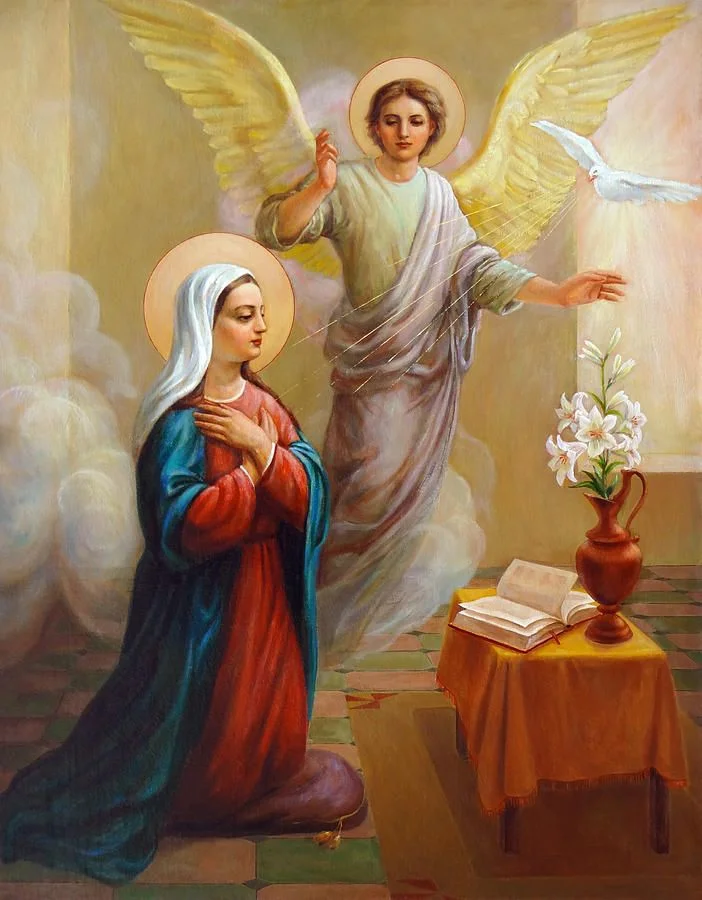
The Annunciation (Luke 1:26-38), the pivotal moment when the Archangel Gabriel announces Mary's conception of Jesus through the Holy Spirit, marks the initiation of the soteriological process. This event, understood within the framework of divine election, highlights God's sovereign choice and Mary's willing obedience. This act of divine agency initiates the Incarnation, the central tenet of Christian theology, where the divine nature of God takes on human form in the person of Jesus Christ. This event directly underscores the importance of Maryโs role in Godโs plan, as the conduit for the very incarnation of God in human form, the very foundation of salvation.
The doctrine of the Immaculate Conception (CCC 491-492) asserts that Mary was conceived without original sin. This belief, though distinct from the Incarnation, is seen as essential to her suitability as the Mother of God. It posits that Mary, free from the inherent human corruption of sin, could serve as the appropriate vessel for the divine seed. This preparedness highlights a preordained role within a larger divine plan of salvation, showing the meticulous process of salvation itself.
The title "Theotokos," signifying "God-bearer," underscores Mary's unique status. By giving birth to Jesus, the divine Son, Mary becomes intimately involved in the redemptive process. This doesn't diminish Christ's divinity but rather highlights Mary's indispensable role in the Incarnation. Furthermore, her role can be understood through the lens of mediation, as she facilitated the divine-human encounter, bridging the gap between God and humanity.
The doctrine of Mary's perpetual virginity (CCC 499) emphasizes her complete dedication to God. This belief, while debated throughout history, is viewed by many as symbolic of her unwavering devotion and her total surrender to God's will. It underscores the purity and holiness attributed to her, reflecting a total consecration to divine purpose within the framework of salvation.
Events such as the Visitation (Luke 1:39-45), the Magnificat (Luke 1:46-55), the Nativity (Luke 2:1-20), the Presentation in the Temple (Luke 2:22-35), the Flight into Egypt (Matthew 2:13-15), the Finding in the Temple (Luke 2:41-52), and the Wedding at Cana (John 2:1-12) showcase Mary's unwavering faith, humility, and obedience to God's will. These acts, viewed through a soteriological lens, highlight not just a passive role but an active participation in the unfolding plan of salvation. Her intercession at Cana demonstrates her role as a powerful advocate for humanity.
Mary's presence at the foot of the cross (John 19:25-27) demonstrates her profound empathy and unwavering love, showcasing her steadfast faith even in the face of immense suffering. The entrustment of Mary to John, viewed through the lens of covenant theology, establishes a new familial bond encompassing all believers, symbolically representing the new covenant established through Christ's sacrifice. This highlights her compassion and her willingness to share in the suffering of Christ and thus the suffering of humanity.
The Assumption (CCC 966), the belief in Mary's bodily ascension into heaven, and her Coronation as Queen of Heaven and Earth (CCC 966) are eschatological events. These beliefs highlight the ultimate triumph of good over evil and signify the future hope and glory awaiting believers. These events serve as a promise and symbol of the ultimate fulfillment of Godโs plan for those who have faith.
The Rosary, a devotional practice centered on Mary, serves as a powerful means of contemplation and prayer, helping to focus on Christ's life and Mary's role within it. This underscores the practical application of Marian devotion, demonstrating how theological concepts translate into spiritual practice and community engagement.
Conclusions and Recommendations
In conclusion, analyzing Mary's role through a rigorous theological lens reveals her indispensable contribution to the soteriological narrative. Her unwavering faith, obedience, and humility serve as exemplary models for believers. Further research could explore the diverse perspectives on Marian doctrines across different Christian denominations, analyzing the theological and cultural factors shaping these interpretations. Understanding the historical and theological context surrounding Marian doctrines is crucial for fostering interfaith dialogue and promoting a deeper understanding of Christian theology. The impact of properly understanding Mary's role in salvation includes increased faith in God's plan, a deeper appreciation for the role of women in religious faith, and a richer devotional life for those who follow this tradition. The applicability of this analysis extends beyond academic circles, impacting liturgical practices, devotional life, and theological education.
Reader Pool: What are your thoughts on the efficacy of utilizing various theological models and frameworks in interpreting the role of Mary within the broader context of Christian soteriology, and how might such interpretations influence contemporary Christian faith and practice?
Updated at: 2023-08-05 13:19:37 (2 years ago by Melkisedeck Leon Shine)
๐ Mary's Role in the Life of Jesus and the Church ๐
Mary, the blessed Virgin Mother, holds a unique and significant role in the life of Jesus and the Church. She was chosen by God to be the vessel through which His Son would enter the world, and her obedience and faithfulness continue to inspire believers today.
As a devout Christian Catholic, I am deeply grateful for the example set by Mary. Her unwavering love and devotion to God's will are truly commendable. ๐
One of the most important aspects of Mary's role is her divine motherhood. She gave birth to Jesus, the Son of God, without losing her virginity. This miraculous event is a testament to her purity and sanctity. ๐น
The Bible clearly attests to Mary's unique role as the Mother of Jesus. In the Gospel of Luke, the angel Gabriel declares, "Hail, full of grace, the Lord is with you" (Luke 1:28). This angelic salutation acknowledges Mary's special favor with God.
Furthermore, Mary's humility is evident when she responds to the angel by saying, "Behold, I am the handmaid of the Lord; let it be to me according to your word" (Luke 1:38). Her willingness to submit to God's plan is an inspiration for all believers. โจ
Mary's role as the Mother of Jesus extends beyond His birth. She was present with Him throughout His life, from His infancy to His crucifixion. Mary's love and support were unwavering, even in the face of immense suffering. ๐
At the wedding in Cana, Mary intercedes on behalf of the wedding party when they run out of wine. Her simple yet powerful words to the servants, "Do whatever He tells you" (John 2:5), demonstrate her unwavering faith in her Son's divine power. ๐ท
The Catholic Church recognizes Mary as the New Eve, who cooperated fully with God's plan of salvation. Just as Eve's disobedience brought sin into the world, Mary's obedience through her "fiat" brought the Savior into the world (CCC 494).
Mary's role in the Church extends to her intercession for the faithful. Catholics believe that Mary, being in heaven, can pray for us and bring our needs before her Son. She is a loving mother, always ready to intercede on behalf of her children. ๐
St. Louis de Montfort, a revered Catholic saint, beautifully captures Mary's role in the spiritual life when he says, "Our entire perfection consists in being conformed, united, and consecrated to Jesus Christ" through Mary (True Devotion to Mary).
The Catechism of the Catholic Church affirms Mary's intercessory role, stating that "her maternal intercession is shown in the Church" (CCC 969). This reminds us that Mary's love and concern extend beyond her earthly life and into the life of the Church.
In the Gospel of John, as Jesus hangs on the cross, He entrusts Mary to the care of the beloved disciple, saying, "Behold, your mother!" (John 19:27). This moment highlights Mary's role as the spiritual mother of all believers, including each one of us. ๐
Mary's life and example of faithfulness challenge us to live a life of surrender to God's will. Her "yes" to God's plan serves as a reminder for us to trust in His providence and embrace His calling in our own lives. ๐บ
Catholics honor Mary with devotion, recognizing her unique and indispensable role in salvation history. By honoring Mary, we honor Jesus, who chose her to be His mother, and we recognize the significance of her intercession in our spiritual journey. ๐
What are your thoughts on Mary's role in the life of Jesus and the Church? How has her example influenced your own faith journey? Share your insights and experiences below! ๐
Updated at: 2023-08-05 13:19:31 (2 years ago by Melkisedeck Leon Shine)
The Blessed Virgin Mary: A Channel of God's Grace
"Hail Mary, full of grace, the Lord is with thee!" These words, spoken by the angel Gabriel, forever changed the course of human history. ๐
The Virgin Mary, the mother of Jesus, holds a special place in the hearts of Catholics around the world. She is seen as a channel of God's grace, a vessel through which His love and blessings flow. ๐น
In the Bible, we see numerous examples of Mary's role as a channel of God's grace. From the moment of the Annunciation, when she humbly accepted God's plan for her life, to the wedding at Cana, where she interceded on behalf of the newlyweds, Mary's presence was a source of blessing. ๐
One of the most profound biblical examples of Mary's role as a channel of God's grace can be found in the Magnificat, her beautiful prayer of praise and thanksgiving. In Luke 1:46-55, Mary proclaims, "My soul magnifies the Lord, and my spirit rejoices in God my Savior." This prayer reminds us that Mary's faith and trust in God allowed her to be open to His grace and love. ๐
The Catechism of the Catholic Church teaches us that Mary is "the Mother of God" and "the model of the Church's faith." She is not only the physical mother of Jesus, but also the spiritual mother of all believers. Through her maternal intercession, she brings us closer to her son and helps us grow in holiness. ๐บ
Throughout history, countless saints and theologians have recognized the important role of Mary in our spiritual journey. St. Louis de Montfort, for example, wrote extensively about Mary's role as a channel of God's grace in his book "True Devotion to Mary." He encourages us to entrust ourselves to Mary's care, knowing that she will lead us closer to Jesus. โค๏ธ
The devotion to the Blessed Virgin Mary is deeply rooted in the Catholic tradition. From the earliest centuries, Christians have looked to Mary as a source of comfort, guidance, and intercession. Her gentle presence and unwavering faith are a shining example for all believers. โช
Mary's unique role as the Mother of God sets her apart from any other human being. She was chosen by God to be the vessel through which His Son would enter the world, bringing salvation to all. As Catholics, we deeply honor and love Mary, recognizing her as a powerful advocate and intercessor before God. ๐
In the words of St. Bernard of Clairvaux, a great medieval saint, "Of Mary there is never enough." This simple yet profound statement reminds us that Mary's love and grace are limitless. No matter how much we turn to her, she always has more to give. ๐ท
The Rosary, a beloved Catholic prayer, is a beautiful way to honor and seek the intercession of the Blessed Virgin Mary. Through meditating on the mysteries of Christ's life, death, and resurrection, we unite ourselves with Mary and open our hearts to God's grace. ๐ฟ
The Catholic Church teaches that Mary's role as a channel of God's grace is not limited to the past. She continues to intercede for us and bring us closer to her Son in the present. Just as she stood at the foot of the cross, offering her love and support to Jesus, she stands with us in our joys and sorrows today. ๐น
As Christians, we are called to imitate Mary's faith, humility, and love for God. Just as she said "yes" to God's plan for her life, we too must surrender ourselves to His will and trust in His providence. Mary shows us that through our openness to God's grace, miracles can happen. ๐
The devotion to Mary is not meant to detract from our worship of God, but rather to enhance it. She leads us closer to her Son, pointing us always towards Jesus. In the words of Pope Francis, "The Church is like Mary, her mother and model: a Church that is a mother, that has children, that has a mother's heart." ๐
In conclusion, the Blessed Virgin Mary is indeed a channel of God's grace. Her complete trust in God, her unwavering faith, and her motherly love make her a powerful intercessor on our behalf. Let us turn to her with confidence, knowing that she will guide us closer to her Son and shower us with God's abundant grace. ๐
What are your thoughts on the Blessed Virgin Mary as a channel of God's grace? How has her presence influenced your spiritual journey? Share your reflections and experiences in the comments below. ๐
Updated at: 2023-08-05 13:20:13 (2 years ago by Melkisedeck Leon Shine)
The Assumed Role of Mary in the Early Church
๐ Introduction ๐
In the early years of the Church, the role of Mary, the Mother of God, was not only highly regarded but also widely celebrated. As a devout Christian Roman Catholic, it brings me great joy to delve into the intriguing topic of Mary's assumed role during this significant period. Let us explore the fascinating aspects surrounding the beloved Mother of Jesus and her influence on the early Church.
1๏ธโฃ Mary, the Ever-Virgin ๐น
From a Christian perspective, it is crucial to acknowledge that the doctrine of Mary's perpetual virginity is deeply rooted in the early Church. It is believed that Mary remained a virgin before, during, and after the birth of Jesus Christ. This belief is based on biblical evidence, such as the Gospel of Matthew 1:25, which states, "But he did not consummate their marriage until she gave birth to a son. And he gave him the name Jesus."
2๏ธโฃ Mary, Mother of God ๐
One of the most significant roles Mary assumed in the early Church was that of the "Theotokos," meaning "Mother of God." This title emphasizes the belief that Mary gave birth to Jesus, who is both fully human and fully divine. This concept is supported by the Gospel of Luke 1:43, where Elizabeth proclaims, "But why am I so favored, that the mother of my Lord should come to me?"
3๏ธโฃ Mary, the New Eve ๐
In addition to being the Mother of God, Mary is often referred to as the New Eve in early Christian theology. Just as Eve played a critical role in the fall of humanity, Mary, through her obedience and humility, played an instrumental part in the redemption of mankind. This parallel is beautifully depicted in the Catechism of the Catholic Church (494), which states, "She is 'the new Eve,' the true mother of all the living."
4๏ธโฃ Mary, the Ark of the New Covenant โช
Another fascinating aspect of Mary's assumed role in the early Church is her association with the Ark of the Covenant. In the Old Testament, the Ark contained the tablets of the Ten Commandments, symbolizing God's presence among His people. Similarly, Mary, as the bearer of Jesus, came to be seen as the new Ark, carrying within her womb the Word of God made flesh. This connection is beautifully illustrated in the book of Revelation 11:19, where John sees "the ark of his covenant" in the heavenly sanctuary.
5๏ธโฃ Mary, the Intercessor ๐
Mary's intercessory role in the early Church cannot be overlooked. As a loving mother, she is believed to intercede on behalf of all believers, presenting their prayers to her Son, Jesus Christ. This belief is supported by the Gospel of John 2:3-5, where Mary intercedes at the Wedding at Cana, saying, "They have no more wine." This act of intercession led to Jesus' first miracle, highlighting her powerful role.
6๏ธโฃ Mary, a Model of Faith and Humility ๐บ
Mary's exemplary faith and humility have served as a model for Christians throughout history. Her "yes" to God's plan of salvation, as seen in Luke 1:38, where she says, "I am the Lord's servant. May your word to me be fulfilled," teaches us the importance of surrendering to God's will with trust and obedience. Her unwavering faith encourages us to emulate her virtues in our own lives.
7๏ธโฃ Mary, the Queen of Heaven ๐
The early Church also recognized Mary as the Queen of Heaven, acknowledging her exalted position as the Mother of God. This title finds its roots in the book of Revelation 12:1, where John sees "a woman clothed with the sun, with the moon under her feet, and a crown of twelve stars on her head." This depiction symbolizes Mary's role as the queenly mother of the Church.
8๏ธโฃ Mary, A Relationship with the Saints ๐
Mary's close relationship with the saints in the early Church is a testament to her esteemed role. Just as we can turn to our friends and family for intercessory prayers, we can also seek the intercession of Mary and the saints, who stand before the throne of God. This understanding is beautifully expressed in the Catechism of the Catholic Church (2683), which states, "Because of their communion with the saints, the Church is inseparably linked to the heavenly liturgy."
9๏ธโฃ Mary, An Inspiration to Artists ๐จ
Throughout the history of art, Mary has been a beloved subject of countless masterpieces. Painters, sculptors, and musicians have drawn inspiration from her beauty, grace, and purity. These artistic representations have not only captured Mary's physical appearance but also aimed to convey her spiritual significance to the early Church as the Mother of God.
๐ Mary, A Source of Hope and Comfort ๐
Mary's assumed role in the early Church also included being a source of hope and comfort for believers. Just as a mother consoles her children, Mary offers solace to those who approach her with their sorrows and joys. Her compassionate nature is reflected in her appearance to St. Juan Diego in Guadalupe, Mexico, where she shared a message of love and healing to bring peace to a troubled world.
๐ค Opinion ๐ค
As we reflect on the assumed role of Mary in the early Church, it is evident that her influence was profound and multifaceted. From her perpetual virginity to her intercessory role and her embodiment of faith and humility, Mary is a cherished figure in Christian Roman Catholic spirituality. Through her example, she continues to inspire countless believers to deepen their relationship with Jesus and strive for holiness.
What are your thoughts on Mary's assumed role in the early Church? How has her devotion impacted your spiritual journey? Let us celebrate the blessedness of the Mother of God and honor her role in our faith. ๐น๐โจ
Updated at: 2025-05-27 10:18:58 (1 year ago by Melkisedeck Leon Shine)
Mary's Elevated Role within Catholic Theology: A Marian Christological Analysis
Introduction
Within the Roman Catholic Church, the Virgin Mary holds a position of unparalleled reverence. This article examines the multifaceted theological underpinnings of Mary's elevated status, specifically focusing on the concept of her queenship, exploring its scriptural basis, doctrinal development, and its implications for Catholic spirituality. Key concepts to be addressed include Marian doctrines (such as the Immaculate Conception, Perpetual Virginity, and the Assumption), Christology (the study of Jesus Christ), and the role of intercessory prayer within the Catholic faith. These concepts will be analyzed using established theological frameworks and contextualized within the historical development of Catholic doctrine and Marian piety.
1. Mary: Theotokos and the Incarnation
The title "Theotokos," meaning "God-bearer," bestowed upon Mary at the Council of Ephesus (431 CE), is foundational to understanding her unique role. This title directly affirms the divinity of Jesus Christ, recognizing Mary as the mother of the incarnate Son of God. This christological affirmation underscores Mary's pivotal position in the divine economy of salvation. The council's decision illustrates the importance of applying conciliar pronouncements to clarify and solidify theological understandings, emphasizing the dynamic interplay between scriptural interpretation and reasoned theological discourse within the Church.
2. Perpetual Virginity: Purity and the Vessel of Grace
The doctrine of Mary's perpetual virginity, while not explicitly stated in all biblical texts, is a long-held belief in the Catholic tradition. This belief emphasizes her purity and holiness, representing her as the uniquely chosen vessel through which God entered the world. This concept demonstrates the application of tradition and theological interpretation to build upon scriptural accounts, showcasing how the Church has developed its understanding of Marian theology over centuries. Interpretations vary on how exactly Matthew 1:25 is understood and applied to this specific belief.
3. Mary as the New Eve: A Reversal of the Fall
The comparison between Mary and Eve provides a powerful theological lens for understanding Maryโs role. While Eve's disobedience initiated humanity's fall from grace, Mary's obedience through her fiat ("Let it be") at the Annunciation reversed this trajectory, bringing forth salvation through her Son. This interpretation applies the concept of typology, a method of interpreting scripture that finds parallels between Old Testament figures and events and their New Testament counterparts. This typological approach emphasizes the redemptive work of Jesus Christ, with Mary playing a crucial mediating role.
4. The Assumption: Bodily Glorification and Queenship
The dogma of the Assumption, proclaimed by Pope Pius XII in 1950, asserts Mary's bodily ascension into heaven. This doctrine, rooted in early Christian tradition and consistent with the belief in the resurrection of Christ, elevates Mary to a position of unique glory and foreshadows the ultimate destiny of all believers. This demonstrates how theological reflection, informed by tradition and scripture, leads to the development of new doctrines that further articulate and clarify the Church's understanding of faith. The declaration showcases the application of papal authority in clarifying and defining theological concepts, thereby establishing consistent doctrine across the Church.
5. Queenship: Intercession and Mediation
The title "Queen of Heaven and Earth" signifies Mary's exalted position and her role as intercessor for humanity. This concept builds on the understanding of Maryโs role in the economy of salvation. The idea of a queen interceding for her people draws parallels with earthly monarchies, illustrating a relatable analogy for Mary's role as advocate before her Son. This analogy, while providing a tangible framework, does not diminish the transcendent nature of Mary's queenship, demonstrating a creative theological approach to communicating complex theological truths.
6. Marian Devotion and the Saints: A Legacy of Piety
The deep devotion to Mary expressed by countless saints throughout Church history underscores the profound impact of her role within the spiritual lives of believers. These expressions of piety demonstrate the lived experience of Marian devotion, providing practical examples of the beliefโs influence on personal faith. Analyzing the writings and actions of the saints demonstrates a significant sociological and anthropological lens through which to understand the development and impact of Marian theology within the context of religious practice.
7. Mary as Spiritual Mother: A Maternal Bond
Jesus' entrustment of Mary to John at the crucifixion ("Woman, behold your son!โฆ Behold your mother!") suggests a spiritual motherhood that extends to all believers. This maternal role connects believers to Mary, fostering a profound spiritual connection. This shows the application of biblical interpretation and theological reflection to establish the role of spiritual motherhood within the Catholic faith, further deepening the understanding of Maryโs role in the life of the believer.
8. Intercessory Power: The Wedding at Cana and Beyond
The miracle at Cana, where Mary intercedes with Jesus, exemplifies her intercessory role. Her actions serve as a model for the faithful, illustrating the power of prayer and the importance of seeking Mary's intercession. The application of this scriptural event highlights the importance of utilizing events and imagery within scripture to illustrate and underscore theological concepts, connecting abstract theological ideas to concrete examples.
Conclusion and Recommendations
The belief in Mary's elevated role within Catholic theology is deeply rooted in scripture, tradition, and reasoned theological reflection. This analysis has demonstrated how various theological concepts and interpretative methodologies are used to understand her position as Queen of All Creation. Further research could explore the diverse expressions of Marian devotion across different cultural contexts, examining how the concept of Mary's queenship has been adapted and understood in various parts of the world. A comparative theological study exploring variations in Marian theology across different Christian denominations could provide a further insight into the unique perspectives on Maryโs role within the Catholic tradition. This study also suggests that a focus on the intercessory role of Mary may be a significant area of exploration, analyzing its efficacy, psychological impact, and its theological implications within the context of prayer and faith. The understanding and application of these concepts requires sensitivity and careful consideration, balancing theological accuracy with pastoral sensitivity.
Reader Pool:
Considering the multifaceted aspects of Mary's role explored in this article, how might a deeper understanding of Marian theology inform and enrich contemporary Catholic spirituality and practice?