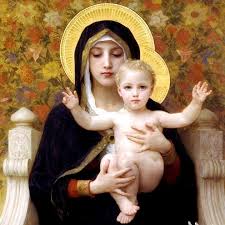
Mary's Role in the Life of the Church
Updated at: 2023-08-05 13:19:27 (3 years ago by Melkisedeck Leon Shine)
πΉMary's Role in the Life of the ChurchπΉ
Mary, the beloved Mother of God, holds a very special place in the life of the Church. Her significance cannot be understated, as she occupies a central role in the spiritual journey of every Christian. Let us explore the multifaceted aspects of Mary's role within the Church and how she continues to inspire and guide us today.
1οΈβ£ Mary's Immaculate Conception: From the moment of her conception, Mary was preserved from the stain of original sin. This unique privilege granted to her by God shows her special role as the vessel through which Jesus would enter the world. As stated in the Catechism of the Catholic Church, "The most Blessed Virgin Mary was, from the first moment of her conception, by a singular grace and privilege of Almighty God and by virtue of the merits of Jesus Christ, Savior of the human race, preserved immune from all stain of original sin" (CCC 491).
2οΈβ£ Mary's "Yes" to God: Mary's unwavering faith and obedience to God's will are exemplary. When the angel Gabriel appeared to her, Mary selflessly accepted her role as the Mother of God by saying, "Behold, I am the handmaid of the Lord; let it be done to me according to your word" (Luke 1:38). Her willingness to fulfill God's plan serves as an inspiration for all believers to submit to His will with humility and trust.
3οΈβ£ Mary, Mother of Jesus and the Church: As the Mother of Jesus, Mary holds a unique position as the Mother of the Church. At the foot of the cross, Jesus entrusted His beloved disciple, John, and all of humanity to the care of His Mother. Through this act, Jesus established a spiritual bond between Mary and the Church, emphasizing her role in our lives as our spiritual mother. Just as Mary cared for Jesus during His earthly life, she continues to intercede for us and guide us on our journey towards salvation.
4οΈβ£ Mary, the Mediatrix of All Graces: The Catholic Church teaches that Mary, as the Mother of God, plays a vital role in the distribution of God's graces to His people. Through her intercession, Mary continuously brings our prayers and petitions before her Son. This belief is deeply rooted in biblical and historical evidence, as exemplified in the wedding at Cana when Mary implored Jesus to perform His first public miracle (John 2:1-11). Mary's intercession led to the turning of water into wine, a sign of the abundant graces poured out upon us through her motherly care.
5οΈβ£ Mary's Assumption: The Assumption of Mary, body and soul, into Heaven is a dogma of faith in the Catholic Church. This teaching affirms that, at the end of her earthly life, Mary was taken up to Heaven by God's power. The Church's belief in the Assumption underscores Mary's unique role in salvation history and her intimate union with her Son. It also serves as a reminder of the glory that awaits all faithful souls who persevere in their journey towards God.
In conclusion, Mary's role in the life of the Church is profound and encompasses various aspects. She is the Immaculate Conception, the humble servant who said "Yes" to God's plan, the Mother of Jesus and the Church, the Mediatrix of All Graces, and the Assumed Queen of Heaven. Her unwavering faith, love, and intercession continue to inspire and guide Christians worldwide. Let us honor our beloved Mother Mary and seek her intercession in our journey of faith.
What are your thoughts on the role of Mary in the life of the Church? How has she impacted your spiritual journey? πΉ
Updated at: 2023-08-05 13:19:48 (3 years ago by Melkisedeck Leon Shine)
The Holy Family: Mary's Role as Mother and Example ππͺ
Introduction: The Holy Family holds a special place in the hearts of Christians worldwide. At its center is the beloved figure of Mary, the Mother of God, who played a crucial role in nurturing and raising Jesus. Let us explore Mary's role as a mother and how she serves as an example for all of us.
Mary's Divine Motherhood: Mary's unique role as the Mother of God sets her apart from any other woman in history. In Luke 1:31-32, the angel Gabriel proclaims, "You will conceive in your womb and bear a son, and you shall name him Jesus. He will be great and will be called Son of the Most High." This divine motherhood highlights Mary's unparalleled closeness to God and her central role in salvation history.
Mary's Exclusive Motherhood: Contrary to some misconceptions, Mary remained a perpetual virgin, dedicating herself entirely to God's plan. The Bible clearly states that Jesus was her only child, as affirmed in Matthew 1:25, "But he had no relations with her until she bore a son, and he named him Jesus." Mary's unique and exclusive motherhood emphasizes her purity and devotion to God.
Mary's Example of Faith: Mary's unwavering faith in God shines through her life, serving as a model for all believers. In Luke 1:38, Mary humbly submits to God's will, saying, "Behold, I am the handmaid of the Lord. May it be done to me according to your word." Her complete surrender to God's plan inspires us to trust in His guidance and embrace our own callings.
Mary's Intercessory Role: As the Mother of God, Mary holds a special place in interceding for us before her Son. In John 2:3-5, Mary's intercession at the Wedding at Cana led to the first public miracle of Jesus, demonstrating her powerful role in our lives. Just as she cared for the needs of the wedding guests, Mary cares for our spiritual needs and intercedes for us in heaven.
Mary's Compassion and Love: Mary's role as a mother extends beyond her relationship with Jesus. Throughout his life, Jesus experienced the love and compassion of Mary, who stood by him even in the most challenging moments. As Christians, we can learn from Mary's unconditional love and emulate her compassion towards others.
The Annunciation: The Annunciation serves as a pivotal moment in Mary's life, as she wholeheartedly accepts God's plan to become the Mother of the Savior. This event showcases her profound humility and willingness to serve. The Catechism of the Catholic Church, paragraph 494, beautifully states, "Called in the Gospels 'the mother of Jesus,' Mary is acclaimed by Elizabeth, at the prompting of the Spirit and even before the birth of her son, as 'the mother of my Lord.'"
Mary's Acceptance of Suffering: Mary's journey as a mother was not without its share of sorrow. Witnessing her Son's crucifixion must have been an unimaginable pain. In John 19:26-27, Jesus entrusts his beloved disciple John to Mary's care, saying, "Woman, behold your son." Even in her agony, Mary demonstrates her strength and motherly love, embracing her role as the spiritual mother of all believers.
Mary's Example of Humility: Mary's humility sets an example for us all. In Luke 1:48, she exclaims, "For he has looked upon his handmaid's lowliness; behold, from now on will all ages call me blessed." Despite her exalted status as the Mother of God, Mary remains humble, acknowledging her dependence on God's grace.
Devotion to Mary: Throughout history, countless saints and theologians have expressed deep devotion to Mary. St. Louis de Montfort once said, "The more the Holy Spirit finds Mary, His dear and inseparable spouse, in any soul, the more active and mighty He becomes in producing Jesus Christ in that soul." This devotion to Mary leads us closer to Jesus, reflecting her role as the spiritual mother of all Christians.
Mary as Our Model: As Christians, we are called to imitate Mary's virtues and seek her intercession. The Catechism of the Catholic Church, paragraph 967, affirms, "By her complete adherence to the Father's will, to his Son's redemptive work, and to every prompting of the Holy Spirit, the Virgin Mary is the Church's model of faith and charity." Mary's example teaches us to embrace God's will, have faith, and show love to others.
Conclusion: Mary's role as a mother and example in the Holy Family is a testament to her unwavering faith, love, and humility. Through her intercession and motherly care, she continues to guide and inspire Christians around the world. Let us reflect on the profound impact Mary had and continues to have on our lives, and strive to follow her example in our own journey of faith.
What are your thoughts on Mary's role as the Mother of God and her example for us? How has she influenced your spiritual journey? Share your opinions and experiences below!
Updated at: 2023-08-05 13:20:13 (3 years ago by Melkisedeck Leon Shine)
The Assumed Role of Mary in the Early Church
π Introduction π
In the early years of the Church, the role of Mary, the Mother of God, was not only highly regarded but also widely celebrated. As a devout Christian Roman Catholic, it brings me great joy to delve into the intriguing topic of Mary's assumed role during this significant period. Let us explore the fascinating aspects surrounding the beloved Mother of Jesus and her influence on the early Church.
1οΈβ£ Mary, the Ever-Virgin πΉ
From a Christian perspective, it is crucial to acknowledge that the doctrine of Mary's perpetual virginity is deeply rooted in the early Church. It is believed that Mary remained a virgin before, during, and after the birth of Jesus Christ. This belief is based on biblical evidence, such as the Gospel of Matthew 1:25, which states, "But he did not consummate their marriage until she gave birth to a son. And he gave him the name Jesus."
2οΈβ£ Mary, Mother of God π
One of the most significant roles Mary assumed in the early Church was that of the "Theotokos," meaning "Mother of God." This title emphasizes the belief that Mary gave birth to Jesus, who is both fully human and fully divine. This concept is supported by the Gospel of Luke 1:43, where Elizabeth proclaims, "But why am I so favored, that the mother of my Lord should come to me?"
3οΈβ£ Mary, the New Eve π
In addition to being the Mother of God, Mary is often referred to as the New Eve in early Christian theology. Just as Eve played a critical role in the fall of humanity, Mary, through her obedience and humility, played an instrumental part in the redemption of mankind. This parallel is beautifully depicted in the Catechism of the Catholic Church (494), which states, "She is 'the new Eve,' the true mother of all the living."
4οΈβ£ Mary, the Ark of the New Covenant βͺ
Another fascinating aspect of Mary's assumed role in the early Church is her association with the Ark of the Covenant. In the Old Testament, the Ark contained the tablets of the Ten Commandments, symbolizing God's presence among His people. Similarly, Mary, as the bearer of Jesus, came to be seen as the new Ark, carrying within her womb the Word of God made flesh. This connection is beautifully illustrated in the book of Revelation 11:19, where John sees "the ark of his covenant" in the heavenly sanctuary.
5οΈβ£ Mary, the Intercessor π
Mary's intercessory role in the early Church cannot be overlooked. As a loving mother, she is believed to intercede on behalf of all believers, presenting their prayers to her Son, Jesus Christ. This belief is supported by the Gospel of John 2:3-5, where Mary intercedes at the Wedding at Cana, saying, "They have no more wine." This act of intercession led to Jesus' first miracle, highlighting her powerful role.
6οΈβ£ Mary, a Model of Faith and Humility πΊ
Mary's exemplary faith and humility have served as a model for Christians throughout history. Her "yes" to God's plan of salvation, as seen in Luke 1:38, where she says, "I am the Lord's servant. May your word to me be fulfilled," teaches us the importance of surrendering to God's will with trust and obedience. Her unwavering faith encourages us to emulate her virtues in our own lives.
7οΈβ£ Mary, the Queen of Heaven π
The early Church also recognized Mary as the Queen of Heaven, acknowledging her exalted position as the Mother of God. This title finds its roots in the book of Revelation 12:1, where John sees "a woman clothed with the sun, with the moon under her feet, and a crown of twelve stars on her head." This depiction symbolizes Mary's role as the queenly mother of the Church.
8οΈβ£ Mary, A Relationship with the Saints π
Mary's close relationship with the saints in the early Church is a testament to her esteemed role. Just as we can turn to our friends and family for intercessory prayers, we can also seek the intercession of Mary and the saints, who stand before the throne of God. This understanding is beautifully expressed in the Catechism of the Catholic Church (2683), which states, "Because of their communion with the saints, the Church is inseparably linked to the heavenly liturgy."
9οΈβ£ Mary, An Inspiration to Artists π¨
Throughout the history of art, Mary has been a beloved subject of countless masterpieces. Painters, sculptors, and musicians have drawn inspiration from her beauty, grace, and purity. These artistic representations have not only captured Mary's physical appearance but also aimed to convey her spiritual significance to the early Church as the Mother of God.
π Mary, A Source of Hope and Comfort π
Mary's assumed role in the early Church also included being a source of hope and comfort for believers. Just as a mother consoles her children, Mary offers solace to those who approach her with their sorrows and joys. Her compassionate nature is reflected in her appearance to St. Juan Diego in Guadalupe, Mexico, where she shared a message of love and healing to bring peace to a troubled world.
π€ Opinion π€
As we reflect on the assumed role of Mary in the early Church, it is evident that her influence was profound and multifaceted. From her perpetual virginity to her intercessory role and her embodiment of faith and humility, Mary is a cherished figure in Christian Roman Catholic spirituality. Through her example, she continues to inspire countless believers to deepen their relationship with Jesus and strive for holiness.
What are your thoughts on Mary's assumed role in the early Church? How has her devotion impacted your spiritual journey? Let us celebrate the blessedness of the Mother of God and honor her role in our faith. πΉπβ¨
Updated at: 2023-08-05 13:19:23 (3 years ago by Melkisedeck Leon Shine)
Mary, Mother of Mercy: An Inspiration for Compassion π
The Blessed Virgin Mary, also known as the Mother of God, is a figure of immense love and compassion. She is a shining example for all Christians to follow when it comes to showing mercy and compassion towards others.
Mary's compassion can be seen in numerous instances in the Bible. One such example is the Wedding at Cana, where she interceded on behalf of the hosts when they ran out of wine. She was concerned for their embarrassment and approached her son, Jesus, who then performed his first miracle by turning water into wine (John 2:1-11).
Another powerful example of Mary's compassion can be found at the foot of the cross, where she stood in the midst of immense suffering and pain. Despite her heartbreak, she showed strength and love, exemplifying true compassion even in the face of unimaginable sorrow (John 19:25-27).
The Catholic Church teaches that Mary's role as the Mother of Mercy extends beyond her earthly life. In the Catechism of the Catholic Church, it states, "Mary, the all-holy ever-virgin Mother of God, is the masterwork of the mission of the Son and the Spirit in the fullness of time" (CCC, 721).
As Catholics, we look to Mary as our intercessor, someone who can bring our prayers and petitions to her Son. This is beautifully captured in the words of Saint John Paul II, who said, "Mary is the one who, knowing the mercy of God better than anyone else, can cause the very fountain of that mercy to gush forth upon people" (Homily, 1 January 2001).
Mary's compassion inspires us to be more merciful towards others, just as she is towards us. She teaches us the importance of reaching out to those in need, showing them compassion, and providing them with love and support.
The Bible tells us in Luke 1:46-55 that Mary herself proclaimed, "My soul magnifies the Lord, and my spirit rejoices in God my Savior, for he has looked on the humble estate of his servant." Mary recognized her own humility and dependence on God, and her humility inspires us to do the same.
Many saints throughout history have also drawn inspiration from Mary's compassion. Saint Mother Teresa of Calcutta, known for her tremendous acts of mercy, once said, "In loving one another through our works, we bring an increase of grace and a growth in divine love" (No Greater Love).
Mary's role as the Mother of Mercy is not only limited to those who follow the Catholic faith. She is a universal figure of love, compassion, and mercy, and her intercession is sought by people from all walks of life.
In the Gospel of Luke, Mary's cousin Elizabeth exclaimed, "Blessed are you among women, and blessed is the fruit of your womb!" (Luke 1:42). This shows that Mary's unique role as the Mother of God is recognized and revered within the Christian community.
Mary's compassion extends beyond her role as a mother. She is also a model of faith and trust in God's plan. When the angel Gabriel appeared to her and announced that she would conceive a child, she responded with faith, saying, "Behold, I am the handmaid of the Lord; let it be to me according to your word" (Luke 1:38).
Pope Francis, the current leader of the Catholic Church, has often referred to Mary as the "Mother of Mercy." He once said, "Mary is the Mother who never refuses us her compassion" (Angelus, 20 September 2015). This reinforces the belief that Mary's compassion is boundless and always available to those who seek it.
As Christians, we are called to show mercy and compassion to others, just as Mary does. In the Gospel of Matthew, Jesus himself tells us, "Blessed are the merciful, for they shall obtain mercy" (Matthew 5:7). Mary serves as a guiding light in this aspect of our faith.
Mary's compassion is a reminder that we are all called to be vessels of God's mercy and love. Just as she carried Jesus within her, we are called to carry his love within us and share it with the world.
In conclusion, Mary, Mother of Mercy, is an incredible inspiration for compassion. Her love, strength, and unwavering faith serve as a beacon for Christians everywhere. Let us strive to follow her example and show mercy and compassion to others, just as she does. What are your thoughts on Mary's compassionate nature? How has she inspired you to show mercy to others?
Updated at: 2023-08-05 13:20:32 (3 years ago by Melkisedeck Leon Shine)
The Assumed Role of Mary as Our Heavenly Advocate π
Introduction πΉ As devoted Christians, we hold a special place in our hearts for the Blessed Virgin Mary, the Mother of God. Throughout history, Mary has been revered as a powerful intercessor and advocate for believers, and her assumed role as our Heavenly Advocate is a source of great comfort and inspiration for many.
Mary as the Mother of Jesus π Mary's unique role as the Mother of Jesus sets her apart from any other human being. The Bible clearly states that Mary was a virgin when she conceived Jesus through the power of the Holy Spirit (Luke 1:26-38). As Catholics, we believe that Mary's perpetual virginity is a testament to her holiness and her sacred role in God's plan of salvation.
The Assumption of Mary into Heaven π One of the most beautiful aspects of our faith is the belief in the Assumption of Mary into Heaven. This doctrine, which was declared by Pope Pius XII in 1950, teaches that Mary was taken body and soul into Heaven after her earthly life. It is a sign of her special favor with God and her role as the Queen of Heaven.
Mary's Intercession in the Wedding at Cana π§ One biblical example of Mary's intercessory role is found in the Wedding at Cana (John 2:1-11). When Mary realized that the hosts had run out of wine, she turned to Jesus and said, "They have no wine." Mary's simple plea led Jesus to perform his first miracle, turning water into wine. This event demonstrates Mary's powerful intercession on behalf of humanity.
The Rosary and the Hail Mary πΏ The practice of praying the Rosary is an integral part of our Catholic devotion to Mary. Each time we recite the Hail Mary, we are calling upon Mary to intercede for us. The words of this prayer are taken directly from the Bible, with the angel's greeting to Mary (Luke 1:28) and Elizabeth's words of praise (Luke 1:42) forming the core of the prayer. Through the Rosary, we entrust our intentions to Mary, our Heavenly Advocate.
The Catechism of the Catholic Church on Mary's Role π According to the Catechism of the Catholic Church (CCC 969), "This motherhood of Mary in the order of grace continues uninterruptedly from the consent which she loyally gave at the Annunciation and which she sustained without wavering beneath the cross." Mary's role as our Heavenly Advocate is closely linked to her motherhood in the spiritual order, as she continues to care for and intercede on behalf of all believers.
The Mediation of Mary and the Saints βͺοΈ While Mary holds a special place as our Heavenly Advocate, it is important to note that our devotion to her does not diminish our devotion to Jesus Christ. Mary's role as an intercessor does not mean that we bypass Jesus or worship her as a deity. Instead, we recognize her as a powerful mediator who points us always to her Son, leading us closer to Jesus through her prayers and example.
The Example of St. Maximilian Kolbe π The life of St. Maximilian Kolbe, a Polish Franciscan friar, serves as a beautiful example of Mary's role as our Heavenly Advocate. In the midst of the horrors of Auschwitz concentration camp during World War II, Kolbe selflessly volunteered to take the place of a fellow prisoner who was chosen to die. Throughout his imprisonment, Kolbe found solace and strength in his devotion to Mary, entrusting himself entirely to her care and intercession.
Mary's Fiat and Our Response π©βπ§βπ¦ Mary's humble response to the angel Gabriel's announcement at the Annunciation is a model for us all. She said, "Behold, I am the handmaid of the Lord; let it be to me according to your word" (Luke 1:38). Just as Mary willingly embraced God's plan for her life, we too are called to respond wholeheartedly to God's will. Through Mary's intercession, we can find the courage and grace to say "yes" to God's plan for us.
The Importance of Seeking Mary's Intercession π Mary's role as our Heavenly Advocate is a gift from God to His Church. When we seek her intercession, we are acknowledging our need for help and guidance in our spiritual journey. Just as a child turns to their mother for comfort and support, we can turn to Mary with confidence, knowing that she will always lead us closer to her Son, Jesus Christ.
The Glorious Assumption of Mary πΉ The Assumption of Mary into Heaven reminds us of the hope we have as believers. Mary's assumption signifies the fulfillment of God's promises and the victory of life over death. By her example, Mary shows us that through faith and obedience to God, we too can hope for the resurrection of our bodies and eternal life in Heaven.
Mary, Our Heavenly Advocate, and the Saints βοΈ In the Communion of Saints, we find a beautiful network of intercession. Just as we ask our fellow brothers and sisters in Christ to pray for us, we can also ask Mary and the saints to intercede on our behalf. Mary, as our Heavenly Advocate, stands at the forefront of this communion, leading us towards deeper union with God and drawing us closer to the saints who have gone before us.
The Words of St. Louis de Montfort π St. Louis de Montfort, a French priest and theologian, wrote extensively about Mary's role as our Heavenly Advocate. He said, "When the Holy Spirit, her spouse, finds Mary in a soul, He hastens there and enters fully into it. He gives Himself generously to that soul according to the place it has given to His spouse." Through our devotion to Mary, we invite the Holy Spirit to work powerfully within us.
Your Thoughts and Opinions? π As we reflect upon the assumed role of Mary as our Heavenly Advocate, it is important to consider our own beliefs and experiences. How has your devotion to Mary impacted your spiritual journey? Do you find comfort in seeking her intercession? Share your thoughts and opinions, and let us continue to grow in our love and understanding of the Blessed Virgin Mary.
Conclusion π In the Catholic faith, we cherish Mary as our Heavenly Advocate, recognizing her unique role in God's plan of salvation. Through her intercession, we find comfort, guidance, and inspiration on our spiritual journey. As we continue to deepen our devotion to Mary, let us draw closer to her Son, Jesus Christ, and strive to emulate her faith and obedience. May Mary, our Heavenly Advocate, continue to lead us always to the heart of God. Amen. ππΉ
Updated at: 2023-08-05 13:19:50 (3 years ago by Melkisedeck Leon Shine)
Mary's Patronage of Mothers and Families πΉβ¨
Mary, the beloved Mother of Jesus, holds a special place in the hearts of mothers and families around the world. She is not only the Mother of God, but also a powerful intercessor, protector, and patroness for those seeking guidance, strength, and grace in their roles as parents and caregivers. ππ
As a devout Christian, I firmly believe in Mary's unique and important role in our spiritual lives. Just as she cared for and nurtured her own son, Jesus, Mary continues to watch over and guide all mothers and families, offering her loving support and intercession. ππ€±
The Bible provides us with numerous examples of Mary's maternal and protective nature. One such example can be found in the Gospel of Luke when Mary rushes to assist her cousin Elizabeth, who is also expecting a child. This beautiful encounter, known as the Visitation, showcases Mary's deep love and concern for her family members. πβ€οΈ
Another powerful moment is when Mary stands at the foot of the cross, witnessing her son's crucifixion. In that painful moment, Jesus entrusts her to the care of the beloved disciple, John, symbolizing her role as the spiritual mother of all believers. Mary's strength and faithfulness during this heartbreaking event highlight her unwavering support for all mothers who face difficult and challenging circumstances. ππΉ
The Catechism of the Catholic Church teaches us that Mary's role as mother extends beyond her earthly life. In paragraph 975, it states, "This motherhood of Mary in the order of grace continues uninterruptedly from the consent which she faithfully gave at the Annunciation and which she sustained without wavering beneath the cross, until the eternal fulfillment of all the elect." This reinforces the belief that Mary's love and intercession for mothers and families is ongoing and everlasting. ππ«
Throughout history, the Catholic Church has recognized Mary's patronage of mothers and families. Saints such as St. Gianna Beretta Molla, who was both a mother and a physician, looked to Mary as their example and sought her intercession in their daily lives. Their stories serve as a reminder of Mary's powerful presence in the lives of those who turn to her for assistance. ππ©ββοΈ
In our own lives, we can also turn to Mary as our spiritual mother and seek her guidance in our roles as mothers and caregivers. Just as she cared for Jesus, Mary understands the joys and struggles of motherhood, and she is always ready to intercede on our behalf before her Son. ππΊ
Mary's patronage is not limited to mothers alone but extends to all families. She desires to bring unity, love, and peace into our homes, just as she did with the Holy Family. When faced with challenges, we can turn to Mary for strength, knowing that she will intercede for us and guide us on our journey of faith. π‘β¨
Let us not forget the power of the Rosary, a beautiful prayer that honors Mary and allows us to reflect on the life of Jesus. Praying the Rosary as a family not only strengthens our bond with one another but also invites Mary to intercede for our intentions and protect our families from harm. πΏπ
The book of Revelation (12:1) presents a vision of Mary as a woman "clothed with the sun, with the moon under her feet, and on her head a crown of twelve stars." This imagery emphasizes her unique and powerful intercession for humanity. We can confidently turn to Mary, knowing that she will always listen to our prayers and assist us in our needs. πππ
As we reflect on Mary's patronage of mothers and families, let us turn to her in prayer and ask for her guidance and protection. Let us entrust our joys, sorrows, and challenges to her maternal care, knowing that she will always be there for us, just as she was for Jesus and the early disciples. ππ
In closing, I would like to ask you, dear reader, how has Mary's intercession and patronage impacted your life as a mother or a member of a family? Do you have any personal experiences or stories to share? I would love to hear your thoughts and insights on this beautiful aspect of our faith. Let us continue to grow in our devotion to Mary and seek her guidance and intercession in our daily lives. πΉβ¨
May God bless you and your family abundantly. ππ
Updated at: 2025-06-27 10:09:23 (1 year ago by Melkisedeck Leon Shine)
Mary as the New Eve: Restoring Humanity's Relationship with God
Introduction: A Theological Exploration of Marian Theology
This essay explores the pivotal role of Mary, the mother of Jesus, within Catholic theology, specifically examining her significance as the "New Eve." This concept rests on the juxtaposition of Eve's actions in the Garden of Eden, leading to humanity's estrangement from God, and Mary's actions, which facilitate humanity's reconciliation with the divine. Key concepts central to this analysis include the Immaculate Conception, Mary's fiat, and her role as intercessor, all viewed through the lens of theological anthropology and soteriology (the study of salvation). We will analyze these through the application of relevant theological principles and models, demonstrating their practical impact on the believer's spiritual journey.
The Immaculate Conception: A Foundation of Purity
The doctrine of the Immaculate Conception posits that Mary was conceived without original sin. This unique state of grace, absent in all other humans except Jesus, is crucial. It establishes Mary as a fitting vessel for the Incarnation β the embodiment of God in human form. This concept aligns with the theological principle of prevenient grace, suggesting a divine preparation paving the way for Christ's arrival. The Immaculate Conception, therefore, isn't merely a historical event but a theological necessity, highlighting God's proactive role in initiating humanity's redemption.
Mary's Fiat: Obedience as the Counterpoint to Disobedience
Mary's "fiat" β "Let it be to me according to your word" (Luke 1:38) β stands in stark contrast to Eve's disobedience. This act of complete surrender to God's will, exemplified in her acceptance of the Annunciation, represents a pivotal moment in salvation history. This can be analyzed through the lens of virtue ethics, emphasizing the significance of obedience as a cardinal virtue, crucial for the success of God's plan. Mary's obedience reverses the course of human history, initiating a new covenant based on faith and love, rather than on rebellion and self-will.
The Annunciation and the Incarnation: Reversal of the Fall
The Annunciation, the moment Gabriel announces Mary's role in bearing the Son of God, is presented theologically as a direct counterpoint to the Fall in the Garden of Eden. While Eve's disobedience brought sin and death, Mary's obedience initiates the triumph over sin and death through the Incarnation. This signifies a powerful reversal of the narrative of humanity's relationship with God, from separation to reconciliation. This parallels the concept of "kenosis," the self-emptying of God in becoming human, mirroring Maryβs self-giving in her fiat.
Mary as Intercessor: Advocate for Humanity
Throughout scripture and tradition, Mary is depicted as an intercessor, advocating for humanity before God. Her role at the wedding at Cana (John 2:1-11), where she prompts Jesus' first miracle, illustrates her compassionate concern for humanityβs needs. This resonates with the concept of mediatorship within Christian theology, where Mary acts as a bridge, facilitating communication and petitioning for grace and mercy on behalf of humanity. This mediating role is not meant to replace Christ's role as sole mediator, but it complements and amplifies His saving work.
Mary as Mother of the Church: Spiritual Motherhood
Jesus' entrusting of Mary to John, and by extension to the whole of humanity ("Woman, behold your son" John 19:26-27), establishes Mary as the spiritual Mother of the Church. This concept of spiritual motherhood reflects Maryβs role as nurturing and guiding the faithful on their journey toward God. This spiritual maternity is not a biological one but a spiritual bond, emphasizing her continuous guidance, protection, and intercession for believers in their spiritual lives.
Marian Titles: Reflecting Diverse Aspects of Her Role
Various titles attributed to Mary, such as "Queen of Heaven and Earth," "Blessed Virgin Mary," and others, each highlight a different facet of her role within the theological framework of the Catholic Church. These titles reveal a layered understanding of Maryβs significance, expressing her unique relationship with God and her crucial role in the redemptive work of Christ. They serve as theological affirmations reflecting the richness and depth of Marian devotion across centuries and theological traditions.
Mary's Assumption: A Glimpse of Eternal Life
The dogma of the Assumption, stating that Mary was taken body and soul into Heaven, signifies the ultimate reward for her faith and obedience. It stands as a powerful symbol of the hope of eternal life for all believers and exemplifies the triumph of grace over death, further demonstrating that the promise of salvation is ultimately victorious.
Devotions such as the Rosary: A Path to Spiritual Growth
Devotions like the Rosary, which involve meditating on the mysteries of Christ's life through the lens of Mary's experience, provide structured opportunities for spiritual growth and prayer. This highlights the importance of contemplative practices in nurturing the relationship between God and humanity, and underscores Mary's role as a model of faith and contemplation.
The Catechism and Sainthood: Affirmations of Theological Understanding
Both the Catechism of the Catholic Church and the testimonies of numerous saints reaffirm the significance of Mary's role in salvation history. These provide consistent theological articulation and personal witness, solidifying the doctrinal position within the larger context of Catholic belief and practice.
Conclusion and Recommendations: Implications and Future Research
Mary's role as the New Eve provides a powerful theological framework for understanding humanity's restoration with God. Her example of complete obedience, coupled with her compassionate intercession, offers a model of faith and devotion for believers today. Further research could explore the comparative analysis of Mary's role across different Christian denominations and traditions, offering a broader interfaith perspective on her significance. Additionally, investigating the impact of Marian devotion on various aspects of Christian life, such as social justice and ethical decision-making, would prove insightful. Finally, examining the psychological and spiritual benefits of Marian devotion and prayer on personal well-being could open new avenues of interdisciplinary research.
Reader Pool: What are the potential limitations or challenges in applying the βNew Eveβ paradigm to contemporary understandings of gender and equality within theological discussions?
Updated at: 2025-06-23 09:06:36 (1 year ago by Melkisedeck Leon Shine)
```htmlIntroduction: Defining Key Concepts
This article explores the theological concept of Mary as Mediatrix, examining her role within Catholic theology and its implications for the spiritual lives of believers. We will define key terms: mediation, in this context, refers to Mary's role as an intercessor, not as a rival to Christ's unique mediation but as a conduit of divine grace. Intercession is the act of pleading on behalf of another. This exploration draws upon biblical passages, theological principles, and the historical understanding of Mary's place within the Christian faith. We will analyze the significance of Mary's role through the lens of various theological models and frameworks, including the concept of divine grace and its transmission within the context of salvation.
Mary's Divine Motherhood and Intercessory Role
The foundational basis for understanding Mary's role as Mediatrix is her divine motherhood. Luke 1:43, where Elizabeth proclaims Mary "the mother of my Lord," establishes Mary's unique relationship with Jesus, the Son of God. This divine motherhood, however, does not diminish Christ's unique mediatorship but rather provides a framework for understanding Mary's intercessory role. Theological models that emphasize the interconnectedness of the Trinity (e.g., Trinitarian theology) can illuminate this dynamic, suggesting that Mary's intercession is an expression of the divine economy, not a subversion of it. This is consistent with the principle of plenitude, where Godβs actions are both supremely powerful and simultaneously graceful and merciful. The relationship between Mary's intercession and divine grace aligns with the concept of instrumental causality, where God utilizes secondary causes (in this case, Mary's prayer) to achieve His purposes.
Biblical Examples of Mary's Intercession
The wedding at Cana (John 2:1-12) serves as a prime example of Mary's intercessory role. Her intervention prompts Jesus's first miracle, illustrating her capacity to influence His actions on behalf of others. This episode demonstrates the efficacy of prayer and its influence on divine action. This can be understood using the framework of communicatio idiomatum, emphasizing the union between Christ's humanity and divinity, suggesting Mary's appeal to him leveraged his divine nature while simultaneously respecting his human experience. This model highlights the interaction between divine sovereignty and human participation in the divine plan.
Mary in Catholic Devotion and Tradition
Catholic devotion, particularly the Rosary, highlights Mary's mediatorial role. The repetitive prayer of the Hail Mary explicitly requests her intercession. The Rosary itself can be viewed through the lens of participatory theologies, emphasizing the active role of believers in cooperating with God's grace. This active participation is further reinforced by the theological concept of sanctification, wherein the believer gradually becomes more holy and Christ-like. The saints' unwavering faith in Mary's mediation further supports this aspect, underscoring the historical understanding of her role within the Catholic Church.
Mary's Role in the Ecclesial Context
The Catholic Church's consistent affirmation of Mary's mediatorship underscores its theological significance. Statements by Popes, such as Pope St. John Paul IIβs reflections on Mary's role in the mystery of redemption, emphasize her position as Mother of Christ and mother to humanity. This perspective aligns with the Church's understanding of the communion of saints, highlighting the interconnectedness of believers across time and space. It also emphasizes the ecclesial nature of salvation, suggesting that the Church is not merely an institution but a living body united in Christ and actively participating in God's saving grace, mirroring the communal aspects of the early church as depicted in the Acts of the Apostles.
The Assumption and Mary's Heavenly Glory
The dogma of the Assumption underscores Mary's unique relationship with Christ, affirming her bodily ascension into heaven. This belief signifies her ultimate triumph over sin and death, reinforcing her role as a model of faithful discipleship. This aligns with the broader Christian concept of eschatology, the study of final things, suggesting a preview of the ultimate victory over death and the promise of heavenly glory. The Assumption can be viewed as a prefiguration of the future hope for all believers, underscoring the significance of Mary's example in the context of Christian discipleship. The theological implications of this belief point to the eschatological fulfillment of salvation history.
Mary's Maternal Love and Our Personal Relationship with Her
Mary's maternal love, evident in her care for Jesus and her continued solicitude for humanity, encourages a personal relationship with her as a loving mother. This personal aspect resonates with the concept of agape, the self-sacrificing love characteristic of God's love for humanity. Her example fosters a deep, nurturing connection with believers seeking guidance and support in their spiritual journeys. Mary's role isn't solely theological; it's profoundly pastoral, providing comfort, guidance, and an example of faith and surrender.
Conclusion and Recommendations
The theological exploration of Mary as Mediatrix reveals a profound and multifaceted understanding of her role within the Christian faith. Her intercessory role, rooted in her divine motherhood and supported by biblical examples and theological reflection, offers believers a powerful model of faith and surrender. Future research could explore further the relationship between Mary's mediatorship and contemporary theological debates, specifically investigating comparative approaches from different Christian denominations. Analyzing different devotional practices focused on Mary across cultures and their impact on the spiritual formation of believers could also provide further insights. The concept of Marian devotion requires continued analysis and discussion to fully understand its nuances and impact on the Christian faith.
Reader Pool:
Considering the various theological perspectives presented, how might a deeper understanding of Mary's mediatorship enrich contemporary approaches to prayer and spiritual growth within the Christian community?
```
Updated at: 2025-06-05 15:23:22 (1 year ago by Melkisedeck Leon Shine)
```htmlThis paper examines the documented apparitions and miracles attributed to the Virgin Mary, exploring their theological significance within the Catholic tradition and analyzing their historical context. Key concepts include Mariology (theological study of Mary), intercession (Mary's role in mediating between humanity and God), and apparition (a supernatural manifestation of a religious figure).
The Biblical Foundation of Marian Piety: The narratives of the Annunciation (Luke 1:26-38) and the Wedding at Cana (John 2:1-11) provide scriptural foundations for Marian devotion. The Annunciation establishes Mary's pivotal role in the Incarnation, highlighting her obedience and faith. Applying the concept of divine grace, we understand Mary's acceptance of God's will as a paradigm of faith, exhibiting a perfect response to God's initiative. The Wedding at Cana showcases her intercessory power, demonstrating how she brings human needs before Christ, illustrating the principle of mediatorship. This early portrayal lays the groundwork for centuries of understanding Mary as a powerful advocate for humanity.
Post-Biblical Marian Apparitions and their Impact: Numerous apparitions throughout history have significantly influenced religious belief and practice. These events, often analyzed through the lens of religious experience, have resulted in profound spiritual and social consequences. The apparition of Our Lady of Guadalupe, for example, profoundly impacted the evangelization of Mexico, demonstrating the power of religious symbols and narrative in shaping cultural identity. Applying the sociological concept of collective effervescence, this event generated a shared sense of religious fervor and community. The miraculous image on Juan Diego's tilma remains a powerful symbol of faith and cultural identity, persisting to this day.
Marian Apparitions and the Role of Intercession: The Catholic Church, in accordance with established doctrines and principles, examines claims of Marian apparitions using a rigorous process of investigation. Approved apparitions, such as Lourdes and Fatima, are studied through the framework of canonical law and historical analysis. These apparitions frequently emphasize prayer, repentance, and devotion to the Rosary. The messages, frequently conveying themes of conversion and social justice, serve as examples of the prophetic function of religious experience within a broader theological framework. The Fatima apparition, for instance, highlighted the importance of prayer and warning of the consequences of societal and spiritual decline, illustrating the power of religious visions in promoting moral and spiritual renewal. The efficacy of Mary's intercession is grounded in her unique relationship with God as the Mother of Jesus.
Marian Devotion and its Theological Significance: The Catholic Church distinguishes between veneration of Mary and the worship due only to God alone. Hyperdulia, the highest form of veneration, is reserved for Mary. This veneration is not worship but a recognition of her unique position in salvation history. Applying the concept of soteriology (the study of salvation), her role as the Mother of God is central to the understanding of Jesus's role as the savior of humanity. Her role as an exemplar of faith and obedience provides a model for Christian life, fostering piety and devotion. The emphasis on her role as intercessor stems from the belief in the interconnectedness of human prayer and divine grace.
The Continued Relevance of Marian Piety: The enduring appeal of Marian devotion highlights its capacity to provide solace, spiritual guidance, and a sense of connection to the divine. The numerous healings and conversions associated with Marian apparitions continue to inspire faith and devotion. Analyzing this from a psychological perspective, hope and comfort derived from such beliefs provide resilience to individuals during times of trial and hardship. The messages of peace, repentance, and prayer delivered through apparitions emphasize the enduring relevance of faith in a complex and often turbulent world. Further research into the psychological and sociological impact of Marian apparitions could shed light on the ways in which these experiences shape individual and collective identities.
The analysis of Marian apparitions and miracles reveals a complex interplay of theological doctrine, historical events, and personal religious experience. The study highlights the significance of Marian devotion in the Catholic faith, emphasizing her role as an intercessor and spiritual mother. From a sociological perspective, the analysis of these apparitions reveals the powerful role of religious symbols and narratives in shaping culture and individual identities. From a theological standpoint, the study affirms the importance of Mary's place within the broader framework of salvation history. Further research could explore the cross-cultural variations in Marian devotion, the psychological impact of Marian apparitions on individuals, and the intersection of Marian spirituality with contemporary social and ethical issues.
The enduring power of Marian apparitions suggests that their impact extends beyond the realm of personal religious experience to influence social dynamics and cultural landscapes. Future research might focus on a comparative analysis of Marian apparitions across different cultures, exploring the adaptive and transformative aspects of the Marian narrative in various contexts. A qualitative study exploring personal experiences and interpretations of these apparitions could enrich our understanding of their significance in contemporary faith.
Reader Pool: Considering the varied interpretations and historical contexts surrounding Marian apparitions, what criteria do you believe should be applied in evaluating the authenticity and theological significance of such events?
```
Updated at: 2023-08-05 13:19:51 (3 years ago by Melkisedeck Leon Shine)
πΉ The Rosary: Unlocking the Mysteries of Christ with Mary πΉ
Introduction: The Rosary is a powerful prayer that allows us to delve deep into the mysteries of Christ's life, death, and resurrection, all while seeking the intercession and guidance of the Blessed Virgin Mary. πΏβ¨
The Power of the Rosary: Through the repetition of Hail Marys and the meditation on the mysteries, the Rosary becomes a spiritual journey where we can encounter the presence of Christ and experience the loving embrace of His mother, Mary. ππ
Mary's Role in our Spiritual Lives: As Catholics, we believe that Mary holds a special place in the divine plan of salvation. Just as she played a pivotal role in the Incarnation, Mary continues to lead us closer to her Son, Jesus. πΉποΈ
The Joyful Mysteries: The first set of mysteries invites us to reflect on the joyful moments in the life of Christ and His mother. We meditate on the Annunciation, the Visitation, the Nativity, the Presentation, and the Finding of Jesus in the Temple. These mysteries remind us of God's infinite love and the joy found in surrendering our lives to Him. ππΌ
The Sorrowful Mysteries: In the second set of mysteries, we contemplate the painful moments leading up to Jesus' crucifixion. Through the Agony in the Garden, the Scourging at the Pillar, the Crowning with Thorns, the Carrying of the Cross, and the Crucifixion, we are reminded of Christ's sacrifice for our salvation. Mary's presence during these moments offers solace and strength. ππ
The Glorious Mysteries: The third set of mysteries brings us to the triumphant resurrection of Jesus and the glorious moments that followed. Meditating on the Resurrection, the Ascension, the Descent of the Holy Spirit, the Assumption of Mary, and the Coronation of Mary, we find hope in the promise of eternal life and the intercessory role of Mary as Queen of Heaven. β¨π
The Luminous Mysteries: Introduced by Saint John Paul II, the Luminous Mysteries shed light on the public ministry of Jesus. They invite us to reflect on His Baptism in the Jordan, the Wedding at Cana, the Proclamation of the Kingdom, the Transfiguration, and the Institution of the Eucharist. These mysteries deepen our understanding of Christ's mission and His presence in the sacraments. π¦π·
The Power of Mary's Intercession: Mary is not only our spiritual mother but also a powerful intercessor before God. Just as she interceded at the Wedding at Cana, she continues to listen to our prayers and present them to her Son. Through the Rosary, we can seek her assistance in our spiritual journey, knowing that she desires nothing more than to lead us closer to Christ. πΉπ
Biblical Examples of Mary's Importance: In Luke 1:28, the angel Gabriel greets Mary with the words, "Hail, full of grace, the Lord is with you." This shows that Mary was chosen by God for a special role in salvation history. Jesus also honored her at the wedding in Cana, where He performed His first miracle at her request (John 2:1-11). These examples affirm Mary's significant role in our faith. ππ
The Catechism and Mary's Perpetual Virginity: The Catechism of the Catholic Church teaches that Mary remained a virgin before, during, and after the birth of Jesus (CCC 499-507). This belief reflects the reverence and honor we hold for Mary as the Mother of God and her lifelong commitment to purity and fidelity. πΉπ
The Witness of Catholic Saints: Throughout history, many Catholic saints have expressed a deep love and devotion to Mary. Saint Louis de Montfort, for example, wrote extensively about the power and importance of the Rosary in his book "The Secret of the Rosary." Saint Teresa of Calcutta, also known as Mother Teresa, once said, "The Rosary is a powerful weapon to put the devil to flight." These saints recognized the spiritual significance of the Rosary and Mary's intercession. πΏβοΈ
The Importance of Praying the Rosary: Praying the Rosary helps us to enter into a deeper relationship with Christ and to meditate on the mysteries of His life. It allows us to seek Mary's guidance and intercession, knowing that she is a loving and compassionate mother. The Rosary brings us closer to the heart of Jesus and helps us to unlock the mysteries of our faith. πΉπ
The Transformative Power of the Rosary: By regularly praying the Rosary, we open ourselves to the transforming power of God's grace. Mary, our gentle guide, leads us on a spiritual journey where we can discover a deeper understanding of Jesus' life, death, and resurrection. Through this prayer, we become more attentive to God's presence in our lives and are inspired to live out our faith with joy and love. πβ¨
Conclusion: The Rosary is a beautiful and profound prayer that invites us to unlock the mysteries of Christ alongside His mother, Mary. It is a pathway to encounter the love of God and to deepen our relationship with Jesus. Let us embrace this powerful tool of prayer and seek Mary's intercession as we journey closer to Christ. πΉπ
Do you find solace in the Rosary? Share your thoughts and experiences in the comments below! πΏπ