Mary, Star of the Sea: Guiding Us to Christ
Updated at: 2023-08-05 13:19:42 (3 years ago by Melkisedeck Leon Shine)
Mary, Star of the Sea: Guiding Us to Christ π
πΉ Mary, the Blessed Virgin, holds a special place in the heart of every Catholic. As the Mother of God and the epitome of virtue, she is a guiding light for all Christians on their journey to Christ.
π Just as sailors look to the stars to navigate their way across the vast ocean, we too can look to Mary, Star of the Sea, to guide us through the stormy seas of life towards our ultimate destination: eternal union with Christ.
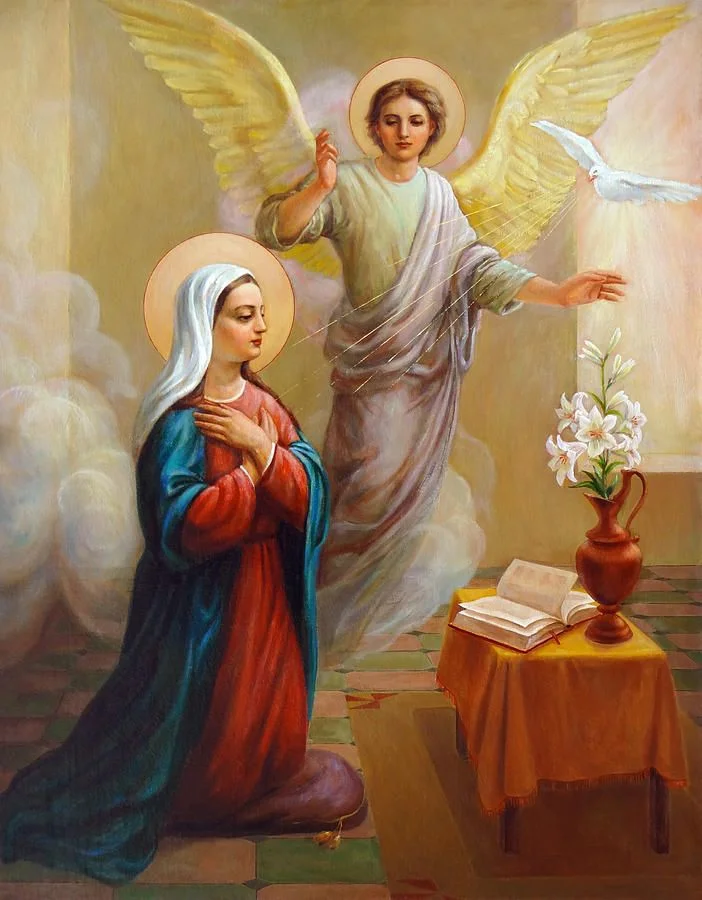
π Throughout the Bible, we see Mary's unwavering faith and her deep love for God. From the Annunciation, where she humbly accepted her role as the mother of Jesus (Luke 1:38), to her presence at the foot of the Cross (John 19:25-27), Mary's life is a testament to her complete surrender to God's will.
π In Luke 1:48, Mary herself proclaims, "For he has regarded the low estate of his handmaiden. For behold, henceforth all generations shall call me blessed." It is through her humility and obedience that Mary became the vessel through which God chose to bring His Son into the world.
π The Catechism of the Catholic Church teaches us that Mary's role as the Mother of God goes beyond her physical motherhood. She is also the spiritual mother of all believers: "In fact, by her maternal charity, Mary cares for the brethren of her Son, who still journey on earth, surrounded by dangers and difficulties, until they are led into their blessed home" (CCC 975).
π Through her intercession, Mary constantly intercedes for us before her Son. Just as at the wedding at Cana, when she asked Jesus to perform His first miracle (John 2:1-11), Mary continues to bring our needs and petitions before Him.
ποΈ In times of darkness and doubt, Mary provides us with a beacon of hope. She reminds us of God's unfailing love and mercy, encouraging us to trust in His divine plan for our lives. Like a guiding star in the night sky, Mary leads us closer to Christ, who is the light of the world.
π The saints throughout history have turned to Mary as their spiritual mother and guide. Saint Maximilian Kolbe, a martyr of the Holocaust, once said, "Never be afraid of loving the Blessed Virgin too much. You can never love her more than Jesus did."
π The rosary, a powerful prayer that leads us to contemplate the mysteries of Christ's life, is a beautiful way to honor Mary. In this meditative prayer, we unite ourselves with Mary as we reflect on the joys, sorrows, and glory of her Son.
πΉ The Hail Mary, a prayer deeply rooted in Scripture, reminds us of Mary's role in our spiritual journey: "Hail Mary, full of grace, the Lord is with thee; blessed art thou among women, and blessed is the fruit of thy womb, Jesus" (Luke 1:28, 42).
π« As we call upon Mary's intercession, she leads us to Christ, just as she led the shepherds and wise men to the manger where Jesus was born. She is the shining star that points us towards the One who is the Way, the Truth, and the Life (John 14:6).
π Mary's guidance is not limited to moments of joy and celebration; she also walks with us in times of suffering and sorrow. Just as she stood at the foot of the Cross, Mary stands by our side, offering us comfort and strength in our trials.
π The saints, too, found solace in Mary's loving presence. Saint Louis de Montfort wrote, "The more the Holy Spirit finds Mary, His dear and inseparable spouse, in any soul, the more active and mighty He becomes in producing Jesus Christ in that soul."
πΊ In our devotion to Mary, we are not worshipping her, but rather honoring her as the Mother of God and acknowledging her unique role in our salvation. She is the Star of the Sea, guiding us to Christ and drawing us closer to His love and mercy.
π What are your thoughts on Mary, Star of the Sea? How has she guided you to Christ in your own spiritual journey? Share your experiences and reflections in the comments below. May Mary, our loving Mother, continue to intercede for us and lead us to her Son, now and forever. Amen. π
Updated at: 2023-08-05 13:19:32 (3 years ago by Melkisedeck Leon Shine)
π Mary's Assumed Role as Queen of Heaven π
When it comes to the role of the Virgin Mary, there is no denying the immense love and devotion that Catholics hold for her. At the center of this devotion is Mary's assumed role as the Queen of Heaven. But what does this title mean and why is it so significant in Christian Catholic spirituality?
1οΈβ£ According to Catholic belief, Mary's assumption into Heaven is a testament to her special place in God's plan for salvation. Just as Jesus ascended into Heaven after his resurrection, Mary, the Mother of God, was also assumed into Heaven, body and soul.
2οΈβ£ The assumption of Mary is not explicitly mentioned in the Bible, but it is deeply rooted in tradition and supported by biblical evidence. For instance, in the book of Revelation, we read about a woman crowned with twelve stars who gives birth to a male child. This woman is often interpreted as Mary, symbolizing her exalted status in Heaven.
3οΈβ£ The Catechism of the Catholic Church teaches that Mary's assumption is a "singular participation" in her Son's resurrection and an anticipation of the future resurrection of all believers. This elevates her to a unique position among the saints and confirms her role as Queen of Heaven.
4οΈβ£ Throughout the centuries, numerous Catholic saints and theologians have written about Mary's queenship. Saint John Damascene, for example, referred to her as the "Queen of all creation." Saint Louis de Montfort described her as the "Queen of saints" and the "Queen of angels."
5οΈβ£ In Catholic spirituality, Mary's queenship is seen as a reflection of her close relationship with Jesus and her role as the Mother of God. Just as a queen holds a special place of honor and authority in a kingdom, Mary holds a unique position of intercession and mediation before her Son.
6οΈβ£ In the Gospel of Luke, the angel Gabriel greeted Mary with the words, "Hail, full of grace, the Lord is with you" (Luke 1:28). This greeting emphasizes Mary's unique role in God's plan and her holiness, which further supports her title as Queen of Heaven.
7οΈβ£ Mary's assumption and queenship are also connected to her perpetual virginity. Catholics believe that Mary, being the Mother of God, remained a virgin throughout her life and did not have any other children besides Jesus. This further emphasizes her purity and exalted status.
8οΈβ£ Jesus, in his infinite wisdom, entrusted Mary as our spiritual mother while he was dying on the cross. He said to John, "Behold, your mother" (John 19:27). This demonstrates Jesus' desire for us to turn to Mary as a motherly intercessor and advocate in our spiritual journey.
9οΈβ£ The early Church Fathers, such as Saint Augustine and Saint Jerome, also recognized Mary's queenship and her role as the New Eve. Just as Eve's disobedience brought sin into the world, Mary's obedience to God's will through her "yes" at the Annunciation reversed the effects of sin and brought forth salvation.
π The devotion to the Queen of Heaven is not meant to detract from the worship and adoration due to God alone. Instead, it serves as a way for Catholics to honor Mary as the most beloved and exalted creature, while acknowledging her unique relationship with her Son.
π Ultimately, the role of Mary as the Queen of Heaven invites us to deepen our relationship with her, seeking her intercession and following her example of faith and obedience to God. She stands as a powerful advocate for all believers, guiding us on our spiritual journey towards eternal life.
What are your thoughts on Mary's assumed role as Queen of Heaven? Do you find comfort and inspiration in her intercession and motherly love? Let us know your opinion!
Updated at: 2023-08-05 13:19:36 (3 years ago by Melkisedeck Leon Shine)
Mary's Visitation: An Encounter of Joy and Blessings
ππ
In the Christian faith, one of the most beautiful moments in the life of the Virgin Mary is her visitation to her cousin Elizabeth. This encounter between two women filled with divine grace is a source of immense joy and blessings for all believers. Let us explore this significant event from a Christian Roman Catholic perspective and reflect on its spiritual significance.
Mary's visitation to Elizabeth was a moment of great joy for both women. Imagine the delight they must have felt as they greeted each other, knowing that they were both chosen by God for a special purpose. As Luke 1:41-42 states, "When Elizabeth heard Mary's greeting, the baby leaped in her womb, and Elizabeth was filled with the Holy Spirit. In a loud voice she exclaimed: 'Blessed are you among women, and blessed is the child you will bear!'"
This encounter between Mary and Elizabeth was also a testament to God's faithfulness and fulfillment of His promises. It was a confirmation that Mary was indeed carrying the Son of God. Elizabeth proclaimed in Luke 1:45, "Blessed is she who has believed that the Lord would fulfill his promises to her!"
The Visitation is a beautiful example of the importance of community and support among believers. Mary, in her humility, did not keep her joy and blessings to herself but shared them with her cousin Elizabeth. This teaches us the value of sharing our faith and blessings with others.
In the act of visiting Elizabeth, Mary also showed us the importance of humility and service. Despite being pregnant with the Son of God, she humbly served her cousin and helped her in her time of need. Let us remember the words of Jesus in Matthew 23:12, "For those who exalt themselves will be humbled, and those who humble themselves will be exalted."
The Visitation reminds us of the sanctity of life and the dignity of the unborn. Elizabeth's unborn child, John the Baptist, recognized the presence of Jesus in Mary's womb. This event foreshadows the recognition of Jesus as the Messiah by John later in life. It emphasizes the value and significance of every life, even in its earliest stages.
The encounter between Mary and Elizabeth also reveals the power of the Holy Spirit in our lives. Elizabeth was filled with the Holy Spirit, and her unborn child leaped in her womb. This shows us that the Holy Spirit can work miracles even before birth and that we should always be open to the workings of the Spirit in our lives.
The Visitation was a moment of prophetic proclamation. Elizabeth, filled with the Holy Spirit, proclaimed the blessedness of Mary among women and the blessedness of the child she carried. This highlights the role of prophecy in God's plan and the importance of proclaiming His truth.
The Visitation is a source of inspiration and encouragement for all believers. It reminds us that God chooses ordinary people to carry out His extraordinary plans. Mary, a young and humble woman, was chosen to bear the Son of God. This should give us hope that God can use each one of us for His divine purposes.
The encounter between Mary and Elizabeth is a reflection of the loving and supportive relationships that exist within the Body of Christ. It encourages us to build strong bonds of love and support within our faith communities.
The Visitation also teaches us the importance of discernment and obedience to God's will. Mary, upon receiving the news that she would conceive the Son of God, willingly accepted God's plan for her life. This challenges us to trust in God's plan for us and to be obedient to His will.
The visitation is an invitation to rejoice in the Lord and to give Him thanks for the blessings He bestows upon us. Just as Mary and Elizabeth praised God for His goodness, we too should lift our voices in praise and thanksgiving.
The Visitation reminds us that God's blessings are not limited to our own lives but extend to those around us. Mary's visit to Elizabeth brought blessings not only to Elizabeth but also to her unborn child, John the Baptist. Our acts of love and kindness can have a ripple effect, touching the lives of those we encounter.
This encounter between Mary and Elizabeth also highlights the importance of intercession and prayer. Mary's presence brought joy and blessings to Elizabeth and her child. We can follow her example by interceding for one another and praying for God's blessings upon those in need.
The Visitation teaches us the importance of recognizing and celebrating the presence of Christ in one another. Just as Elizabeth recognized the presence of Jesus in Mary's womb, we are called to see Christ in our brothers and sisters, treating them with love and dignity.
This encounter between Mary and Elizabeth invites us to reflect on our own lives and consider how we can bring joy and blessings to others through our actions and words. Let us ask ourselves: How can we be vessels of God's grace and love in the world?
As we delve into the spiritual significance of Mary's Visitation, we are reminded of the blessings that flow from our encounters with God and one another. It is an invitation to rejoice, to serve, to love, and to be humble. May we follow in the footsteps of Mary, embracing God's plan for our lives and sharing the joy and blessings that come from encountering Him.
What are your thoughts on Mary's Visitation? How does this encounter inspire you in your own spiritual journey? Share your opinions and reflections below. πΊπ
Updated at: 2025-06-05 10:22:55 (1 year ago by Melkisedeck Leon Shine)
This paper examines the Visitation of Mary to Elizabeth, a pivotal event in Christian theology, through the lenses of theological interpretation and sociological analysis. Key concepts explored include divine grace (the unmerited favor of God), theological anthropology (the study of humanity in relation to God), communion (a state of fellowship or unity), and social capital (the benefits derived from social networks).
1. The Fulfillment of Prophetic Promises and the Affirmation of Divine Grace: The Visitation is not merely a social encounter; it's a powerful confirmation of God's promises. Elizabeth's recognition of Mary's divinely conceived child, Jesus, validates Mary's faith and God's faithfulness (Luke 1:45). This event aligns with the concept of divine grace, highlighting God's initiative and the transformative power of belief. Applying this theologically, we see how individual faith intersects with a larger narrative of divine action, creating a profound sense of meaning and purpose. Sociologically, this demonstrates the strength of faith-based communities in providing support and validation during times of uncertainty.
2. The Power of Communion and the Generation of Social Capital: The Visitation exemplifies the transformative power of communion. The joyous exchange between Mary and Elizabeth establishes a profound bond, highlighting the importance of social connection in spiritual growth. This encounter generates significant social capital for both women, providing emotional support and strengthening their communal ties. From a sociological perspective, this underscores the vital role of social networks in fostering resilience and mutual support within religious communities. In practical terms, this resonates with the contemporary need for strong support networks within faith communities to provide mental and spiritual well-being to its members.
3. Humility, Service, and the Embodiment of Christ-like Behavior: Mary's journey to assist her cousin demonstrates humility and selfless service, virtues central to Christian teachings. This action reflects the concept of kenosis (self-emptying) β a theological principle that emphasizes Christβs self-sacrificial love. Mary's actions, despite her own significant role in God's plan, exemplify this principle by prioritizing the needs of another. The model of selfless service is applicable to various contexts; for example, in healthcare settings, where nurses and doctors prioritize the patient's well-being, embodying a Christ-like approach to care. This mirrors a practical application of theological principles in everyday life.
4. The Sanctity of Life and the Recognition of the Divine Presence: The Visitation underscores the sanctity of life, even in its earliest stages. John the Baptist's recognition of Jesus in the womb emphasizes the inherent dignity of the unborn child. This resonates with ethical discussions surrounding reproductive rights and the value of human life from conception. The theological understanding of the sanctity of life provides a framework for ethical decision-making in challenging situations.
5. The Role of the Holy Spirit and the Miraculous Nature of Faith: The presence of the Holy Spirit is palpable in the Visitation narrative. Elizabethβs being filled with the Spirit and Johnβs leaping in the womb emphasize the Spiritβs active role in God's plan and its transformative power on individuals. This can be viewed through the lens of charismatic theology, which emphasizes the gifts and workings of the Holy Spirit in believers' lives. The impact extends beyond the personal, influencing community interactions and societal structures. This has practical application in faith-based initiatives promoting social justice, where individuals empowered by the Spirit can effect positive change.
6. Prophetic Proclamation and the Communication of Divine Truth: Elizabethβs prophetic proclamation of Mary's blessedness elevates the Visitation beyond a private encounter; it transforms it into a public affirmation of God's work. This resonates with concepts in communication studies focusing on the persuasive power of prophetic utterances and the importance of authentic communication within faith communities. The impact is particularly salient in contemporary contexts, where effective communication of faith is vital in transmitting religious truths and inspiring action.
7. Inspiration, Obedience, and the Emulation of Faith: Mary's obedience to God's will serves as a model for believers. Her willingness to embrace a challenging role demonstrates profound trust and obedience, reflecting the concept of agape (selfless love) within Christian theology. This concept provides guidance for navigating life's challenges and maintaining faith amidst uncertainties. In practical application, this inspires individuals to be obedient to their conscience and the guiding principles of their faith.
8. Building Community and Fostering Supportive Relationships: The Visitation exemplifies the importance of strong community bonds within religious contexts. The loving support exchanged between Mary and Elizabeth demonstrates the benefits of nurturing positive relationships within a faith community. This strengthens the social fabric of the community and provides a foundation for mutual support and growth.
Conclusions and Recommendations: The Visitation of Mary to Elizabeth offers a rich tapestry of theological and sociological insights. The encounter demonstrates the power of faith, the importance of community, and the profound impact of divine grace. Further research could explore the Visitation's influence on contemporary theological discourse and its implications for building stronger, more supportive faith communities. A comparative study of similar encounters in various religious traditions could offer additional perspectives. The concepts of divine grace, communion, and social capital, analyzed within this event, can provide valuable insights for fostering positive social change and enhancing communal well-being. The emphasis on humility, service, and obedience provides an ethical framework applicable to various societal challenges. Finally, exploring the interaction between prophetic communication and social impact offers promising avenues for future research.
Reader Pool: How can the principles of humility, service, and communion, as exemplified in the Visitation, be practically applied to address contemporary social issues and foster more just and equitable communities?
Updated at: 2025-06-21 00:59:45 (1 year ago by Melkisedeck Leon Shine)
This article explores the theological concept of Mary as Mediatrix, examining her role within the Christian faith, particularly within Catholic theology. We will define key terms, analyze biblical and theological foundations, and explore the implications of this doctrine for personal spiritual growth. Key concepts include mediation (the act of intervening or interceding on behalf of others), intercession (prayer on behalf of another), and grace (God's unmerited favor and divine assistance). We will also touch upon relevant theological frameworks such as the Marian doctrines within Catholicism.
The foundational basis for understanding Mary's role as Mediatrix lies in her divine motherhood. Luke 1:43, where Elizabeth calls Mary "the mother of my Lord," establishes Mary's unique position in the history of salvation. This title, "Mother of God" (Theotokos), emphasizes her role in the Incarnation β God becoming man in Jesus Christ. This divine motherhood is not merely a biological fact, but a theological reality that underscores Mary's intimate relationship with Christ and her participation in the redemptive work of God. Applying the Trinitarian model of God here, this highlights the co-operation of the Divine and human in the redemptive work.
Catholic theology affirms Mary's role as Mediatrix, clarifying that her mediation doesn't supersede or diminish Christ's unique mediation. Instead, it complements and enhances it. As the Catechism of the Catholic Church states, Mary's mediation flows from her motherhood and her complete union with God's will. This mediation is understood not as a substitution for Christ's role, but as a participation in his grace. The concept of *subsidiarity* can be applied here, where God primarily acts, but uses secondary means (in this case Mary's role) to achieve his goal of salvation. Applying the ecclesiological models of the church as both a maternal and mystical body of Christ, Mary is understood as co-operating in her maternal role with the mediatorial role of Christ.
The wedding at Cana (John 2:1-12) provides a powerful example of Mary's intercession. Her request to Jesus to address the lack of wine illustrates her awareness of human needs and her confident approach to her Son. This episode demonstrates Mary's active role in God's plan, not merely as a passive observer, but as a participant who collaborates in bringing about God's grace. Theological analysis of this event, and other instances in scripture and tradition, shows that Mary's intercession is not based on her inherent power, but on her intimate relationship with Jesus and her unwavering faith. Her role demonstrates *vicarious participation*, where she participates in the effects of Christ's mediation.
Devotional practices, such as the Rosary, further highlight Mary's role as Mediatrix. The Rosary's repetitive prayers, especially the "Hail Mary," invoke Mary's intercession, seeking her help in bringing our petitions to Christ. This practice is based on the theological understanding of the communion of saints, implying a collaborative network of intercession, where Mary's role is particularly emphasized due to her unique relationship with Christ.
The doctrine of the Assumption of Mary, affirming her bodily ascension into heaven, underscores her unique relationship with Christ and her role in the eschatological reality of the Church's ultimate destiny. The doctrine of perpetual virginity, asserting that Mary remained a virgin before, during, and after the birth of Jesus, emphasizes the purity and holiness with which she cooperated in the Incarnation. Both doctrines serve to highlight her unique place in the history of salvation and her ongoing role as a model of faith and obedience. These doctrines are also illustrative of the concept of the *Immaculate Conception*, which emphasizes her sinless nature from the moment of her conception.
Mary's "Fiat," her "yes" to God's will (Luke 1:38), exemplifies the pinnacle of faith and obedience. Her complete surrender to God's plan serves as a powerful model for all Christians. Her life embodies the virtues of humility, trust, and unwavering faith, showing us the importance of surrendering to God's plan amidst life's challenges. Analyzing Maryβs response using the lens of *virtue ethics* provides a framework for Christian life.
The concept of Mary as Mediatrix, while a source of ongoing theological discussion, presents a rich tapestry of theological insights that emphasize the collaboration between Mary, the Church, and Christ within the work of salvation. Understanding Mary's role as Mediatrix can profoundly impact personal spiritual lives by fostering a deeper devotion to Christ and a more mature understanding of God's grace. Further research might explore the comparative theological perspectives on Mary's role across various Christian denominations, enriching the discussion. This would also include a critical evaluation of potential misinterpretations and excesses surrounding Marian devotion. The impact of emphasizing Mary's role should be carefully considered, ensuring that it always points toward Christ as the ultimate mediator and source of grace.
Reader Pool: How does the concept of Mary's mediation, as presented in this article, impact your understanding of the relationship between Mary, Christ, and the believer?
Updated at: 2023-08-05 13:19:17 (3 years ago by Melkisedeck Leon Shine)
Experiencing Mary's Motherly Love and Care β€οΈπ
As a devoted Christian and a Roman Catholic, I have always felt a deep connection with the Virgin Mary, the Mother of God. Her unwavering love and care for humanity is truly inspiring, and experiencing her motherly presence in my life has brought me immense comfort and joy. Today, I would like to share with you 15 points that highlight the beautiful experiences I have had with Mary, and how she has impacted my spiritual journey. Let's embark on this uplifting journey together!
1οΈβ£ Mary's Intercession: One of the most amazing aspects of Mary's love is her intercession on our behalf. Just as she interceded at the wedding in Cana (John 2:1-11), she intercedes for us to her Son, Jesus. Through her prayers, she has the power to obtain numerous graces for us from God.
2οΈβ£ Protection and Guidance: Mary is like a loving mother who protects and guides her children. Just as she guided the shepherds to find the baby Jesus (Luke 2:15-20), she guides us on our spiritual journey, leading us closer to her Son.
3οΈβ£ Maternal Comfort: Mary's love brings great comfort in times of sorrow and distress. Like a caring mother, she consoles us and offers solace, just as she did at the foot of the cross (John 19:25-27).
4οΈβ£ Hail Mary: The Hail Mary is a powerful prayer that enables us to connect with Mary on a personal level. By reciting this prayer, we acknowledge her as our mother and ask for her intercession.
5οΈβ£ Holy Rosary: The Holy Rosary is a beautiful devotion that allows us to meditate on the life of Jesus through the eyes of Mary. By praying the Rosary, we invite Mary into our lives and experience her motherly presence.
6οΈβ£ The Assumption: The Assumption of Mary into heaven is a testament to her special role as the Mother of God. Her assumption gives us hope and reassurance that she is with us always, guiding and loving us.
7οΈβ£ Apparitions: Throughout history, Mary has appeared to various individuals, offering messages of love, hope, and conversion. These apparitions serve as a reminder of her constant presence and care for humanity.
8οΈβ£ Miracles and Healings: Many miraculous healings and interventions have been attributed to Mary's intercession. These extraordinary events remind us of her powerful love and her ability to bring about divine interventions in our lives.
9οΈβ£ Mary as the New Eve: Just as Eve played an integral role in the fall of humanity, Mary, as the New Eve, played a pivotal role in our redemption through her Fiat (Luke 1:38). Her obedience and love for God make her an exemplary figure of faith.
π Devotion to Mary: Devotion to Mary is a key aspect of Roman Catholic spirituality. Through practices such as consecration to Mary and attending Marian pilgrimages, we deepen our relationship with her and experience her motherly love more profoundly.
1οΈβ£1οΈβ£ Divine Motherhood: Mary's title as the Mother of God highlights her unique and exalted role in salvation history. This divine motherhood gives us a glimpse into the depths of her love and care for each one of us.
1οΈβ£2οΈβ£ The Catechism of the Catholic Church: The Catechism beautifully describes Mary's role as the mother of believers and her constant intercession for us. It teaches us to turn to her in times of need and to seek her guidance on our spiritual journey.
1οΈβ£3οΈβ£ The Saints' Devotion: Many Catholic saints, such as St. Louis de Montfort and St. Maximilian Kolbe, had a deep devotion to Mary and experienced her motherly love firsthand. Their writings and testimonies inspire us to deepen our own devotion to her.
1οΈβ£4οΈβ£ The Rosary as a Weapon: The Rosary is often referred to as a spiritual weapon, capable of bringing about tremendous graces and spiritual victories in our lives. Through the Rosary, we invoke Mary's intercession and experience her motherly love and protection.
1οΈβ£5οΈβ£ Personal Testimonies: Countless individuals have shared powerful testimonies of experiencing Mary's love and care in their lives. These personal stories serve as a testament to her maternal presence and the transformative power of her love.
In conclusion, experiencing Mary's motherly love and care has been a profound blessing in my life. Through her intercession, guidance, and comfort, she has deepened my faith and brought me closer to her Son, Jesus. I encourage you to open your heart to Mary's love and to seek her intercession in your own spiritual journey. Have you had any personal encounters with Mary's motherly love? How has she impacted your life? I would love to hear your thoughts and experiences. πΉπ
Updated at: 2025-06-05 10:20:22 (1 year ago by Melkisedeck Leon Shine)
This essay explores the multifaceted role of Mary, Mother of Jesus, within Catholic theology and tradition. We will examine key doctrines concerning Mary, analyze their theological implications, and explore their historical impact on Christian spirituality. Central concepts include Mariology (the study of Mary), the Immaculate Conception, the Assumption, and the concept of intercession within a faith-based framework.
The doctrine of the Immaculate Conception, proclaimed dogma in 1854 by Pope Pius IX, asserts that Mary was conceived without original sin. This is not to suggest Mary was sinless during her life, but rather that she was preserved from the inherited stain of sin from the moment of her conception. This theological construct, rooted in the belief in Mary's unique role as the Mother of God, prepares her to be a worthy vessel for the Incarnation. It exemplifies the application of divine grace preceding human action, a key concept within many theological frameworks. From a sociological perspective, this doctrine solidified Mary's position as a pivotal figure within the Catholic Church hierarchy and influenced devotional practices for centuries.
Mary's role in the life of Jesus and the subsequent development of Christianity is undeniable. The Annunciation, as recounted in Luke 1:26-38, presents Mary's humble acceptance of God's will, illustrating the concept of kenosis (self-emptying) in action. Her "fiat" ("let it be"), a moment of profound faith and submission, became a model for Christian discipleship. This narrative highlights the importance of obedience and faith as essential components of a spiritual journey. Biblical accounts like the Wedding at Cana (John 2:1-11), where Mary intercedes with Jesus, further emphasize her role as a mediator between humanity and the divine. This intercessory role exemplifies the concept of divine grace operating through human agency, a common theme in Catholic theology. The event is frequently interpreted through the lens of ecclesiology, demonstrating the supportive nature of the early church.
The Assumption of Mary, another core Marian doctrine, declares that Mary was taken body and soul into heaven. This doctrine, proclaimed dogma in 1950, is understood as a recognition of Maryβs unique relationship with God and her victory over death. This event is profoundly symbolic, representing the ultimate triumph of faith and the anticipation of the resurrection for believers. From a historical perspective, the Assumption's formalization reflects a long-standing tradition of Marian veneration, deeply rooted in popular piety and reinforced by numerous artistic and literary representations.
The concept of Marian intercession is central to Catholic devotion. Mary is frequently invoked as a mediator between humanity and God, offering prayers and requests on behalf of the faithful. The Rosary, a traditional Catholic devotion, focuses on the life of Jesus and Mary, providing a framework for contemplation and prayer. Many individuals attribute miraculous interventions or spiritual guidance to Maryβs intercession, underscoring its significant influence on spiritual lives and personal faith development. This belief system is grounded in the broader theological concept of the Communion of Saints β the belief that all the faithful, living and deceased, are united in Christ and can assist each other spiritually.
Numerous apparitions attributed to Mary, such as those at Lourdes and Fatima, have profoundly impacted both individuals and communities. These events, often marked by reported healings and profound spiritual experiences, highlight the enduring power of faith and the perceived ongoing presence of Mary within the lives of believers. The socio-psychological effects of these apparitions have been extensively studied, emphasizing the role of faith, hope, and community in shaping individual experiences and collective narratives. Analyzing these events from a sociological perspective often unveils the intricate interplay between social, religious, and psychological factors.
Mary's portrayal in Scripture and tradition underscores her pivotal role in salvation history. Her unwavering faith, profound humility, and unwavering love for her son serve as powerful examples for believers. By studying Mary's life and role, Christians can deepen their understanding of God's grace, the importance of faith, and the role of prayer in spiritual growth. The application of theological concepts like exemplarity, studying the lives of saints for guidance, is central to this process, demonstrating how faith is lived and exemplified throughout history.
This exploration of the Marian paradigm reveals the significant theological, historical, and spiritual impact of Mary, Mother of Jesus, within Catholic tradition. The doctrines surrounding Mary, far from being isolated theological concepts, have shaped devotional practices, artistic expressions, and social structures for centuries. Further research into the socio-historical context of Marian devotion could illuminate the complex relationship between theological doctrines and their impact on culture and society. Additionally, exploring the psychological aspects of Marian piety through empirical studies could contribute to a deeper understanding of its influence on individual faith formation and spiritual well-being. Future studies might consider a comparative analysis of Marian devotion across different Christian denominations, examining variations in theological interpretations and devotional practices.
Reader Pool: Considering the diverse interpretations of Mary's role within Christianity, how might a deeper understanding of Mariology contribute to greater ecumenical dialogue and mutual respect among various faith traditions?
Updated at: 2025-06-19 15:28:34 (1 year ago by Melkisedeck Leon Shine)
```htmlMary's Intercession: A Pathway to Divine Grace
Introduction
Within the framework of Catholic theology, the Virgin Mary, Mother of God, occupies a position of profound reverence and devotion. This stems from her unique relationship with Jesus Christ and the belief in her capacity to intercede on behalf of humanity. This exploration delves into the theological underpinnings of Marian intercession, examining its significance as a conduit to experiencing divine grace. Key concepts analyzed include the theological understanding of intercession, the role of Mary within the ecclesiology of the Catholic Church, and the application of Marian devotion in personal spiritual growth. The concept of *grace*, as understood within Catholic tradition, refers to the free and undeserved gift of God's love and divine assistance, enabling spiritual growth and salvation. Intercession, in this context, is the act of praying on behalf of another, invoking divine assistance for their needs. This article will demonstrate how the concept of Mary's intercession functions within a robust theological framework and how this impacts the lived experience of Catholic believers.
1. Mary's Unique Filial Relationship with Christ
The cornerstone of Mary's role as intercessor rests upon her singular status as the Mother of God (Theotokos), a title formally affirmed by the Church. This unique maternal bond with Jesus Christ provides the basis for her intercession. Applying the sociological concept of kinship and patronage, Mary's relationship with Jesus forms a powerful network of influence. Just as a mother advocates for her child, Mary's maternal intercession for humanity draws upon this intimate connection, enabling a pathway for divine grace.
2. Mary as a Model of Humility and Obedience
Mary's unwavering humility, exemplified in her acceptance of God's will ("Behold, I am the handmaid of the Lord; let it be to me according to your word" - Luke 1:38), serves as a potent model for believers. Her humble obedience to the divine plan underscores the importance of surrender and receptivity to God's grace. This aligns with the theological virtue of humility, a key component of spiritual maturity and a prerequisite for receiving divine grace. The virtue of humility, understood through the lens of virtue ethics, promotes self-awareness and a recognition of one's dependence on God's grace.
3. The Wedding at Cana: A Manifestation of Intercessory Power
The miracle at the Wedding at Cana (John 2:1-11) provides a powerful illustration of Mary's intercessory capacity. By bringing the needs of the wedding party to Jesus, Mary facilitates the first miracle in the Gospel of John. This narrative exemplifies the effectiveness of Mary's intercession as a means of obtaining divine intervention and grace. Analyzing this event through the lens of narrative theology, we can identify it as a pivotal moment demonstrating the efficacy of prayer and faith and Mary's role in fostering divine intervention.
4. The Rosary: A Structured Practice of Marian Devotion
The Rosary, a traditional Catholic devotion, provides a structured framework for contemplating the life of Christ through the lens of Mary. Each Hail Mary serves as a petition for her intercession, effectively connecting the believer with Jesus. Applying the principles of contemplative prayer, the Rosary functions as a meditative practice that fosters a deeper relationship with both Jesus and Mary, promoting spiritual growth and a greater receptivity to divine grace. The repetitive nature of the Rosary may be understood through the psychological lens of mindfulness practice, promoting inner peace and spiritual awareness.
5. Mary as the New Ark of the Covenant: A Symbol of God's Presence
The Catholic Church views Mary as the "New Ark of the Covenant," signifying her role as a vessel of God's presence and grace. The Catechism of the Catholic Church highlights Mary's complete adherence to the Father's will, echoing the theological concept of divine election and the importance of faithful obedience. In comparing her to the Ark of the Covenant from the Old Testament, we understand Mary as a living symbol of the presence of God within the Church, connecting humanity to the divine through her intercession.
6. The Witness of Saints: Historical Evidence of Marian Intercession
The profound devotion to Maryβs intercession throughout history, as evidenced by the testimonies of numerous saints, strengthens the belief in her powerful influence. The accounts of saints such as Saint Maximilian Kolbe demonstrate the widespread acceptance and effectiveness of this aspect of Marian piety. Examining these accounts offers valuable insights into the historical development and the enduring significance of Marian devotion in the Catholic Church. This resonates with the historical-critical method, providing insight into how Maryβs role has been interpreted and experienced across centuries.
7. Marian Apparitions and Messages: Contemporary Manifestations of Grace
Approved Marian apparitions, such as those at Lourdes and Fatima, reinforce Mary's ongoing role as an intercessor. These apparitions often convey messages of faith, repentance, and hope, inviting believers to experience the transformative power of God's grace. Applying the principles of religious studies and phenomenology, these apparitions can be interpreted as powerful expressions of religious experience and provide compelling evidence for the ongoing relevance of Marian devotion.
8. The Assumption: A Celebration of Mary's Glorified Intercession
The dogma of the Assumption, proclaiming Mary's bodily and spiritual ascension into heaven, underscores her unique place within God's plan of salvation. This event highlights Mary's continued intercession from a state of eternal glory, providing assurance of her ongoing capacity to mediate on behalf of humanity. This dogma, understood within the framework of systematic theology, provides a powerful affirmation of Mary's elevated status within the Church and her unwavering role in mediating God's grace.
9. Mary's Role within the Mystical Body of Christ
Mary's participation in Christ's redemptive work establishes her as a spiritual mother to all believers. This concept underscores the integral role of Mary within the Mystical Body of Christ. Catholic theology positions her as a model of faith, charity, and obedience, serving as a guiding figure for all who seek a deeper relationship with God. Applying ecclesiological frameworks, we observe her role as a mediating figure between humanity and Christ, facilitating access to divine grace within the community of faith.
10. The Efficacy of Mary's Intercession: Trust and Confidence in Divine Action
Maryβs intercession's efficacy stems from her uniquely close relationship with Jesus. Turning to her with trust and confidence reflects faith in her capacity to guide us toward Godβs grace, invoking the concept of *fides implicita*, or implicit faith. This illustrates the powerful dynamic of intercessory prayer and the unwavering belief in the effectiveness of turning to Mary for divine help. Understanding this through the lens of pastoral theology reinforces the importance of faith and trust in spiritual practice.
Conclusion and Recommendations
The theological exploration of Mary's intercession reveals a profound and multifaceted role within Catholic spirituality. Her unique relationship with Jesus, coupled with her exemplary humility and obedience, provides a compelling framework for understanding her capacity to intercede on behalf of humanity. Through devotions such as the Rosary, and the contemplation of her life, believers can actively cultivate a deeper relationship with God, experiencing His grace and mercy. Further research could explore the psychological and sociological impacts of Marian devotion, examining its influence on individual spiritual development and community cohesion. The efficacy of Mary's intercession, as understood through the lens of theological reflection and the rich tapestry of Catholic tradition, offers a powerful pathway for believers to encounter the transformative power of divine grace and to deepen their relationship with God through the mediating influence of Mary.
Reader Pool: What are the potential limitations or criticisms of the concept of Mary's intercession, and how might these be addressed within a contemporary theological context?
```
Updated at: 2023-08-05 13:19:53 (3 years ago by Melkisedeck Leon Shine)
Mary's Mediation: A Bridge to God's Grace
π Introduction
In the realm of Christianity, few figures hold as much reverence and devotion as the Virgin Mary, the Mother of God. She is a beacon of hope and a symbol of God's grace and love towards humanity. One aspect of Mary's role that devout Catholics hold dear is her ability to mediate between us and God. This article aims to explore the significance of Mary's mediation and how it can be a bridge to experiencing God's grace in our lives. πΉππ»
The foundation of Mary's mediation lies in her unique role as the Mother of God. This title, affirmed by the Church, signifies her intimate connection to Jesus Christ. Just as a mother can intercede for her child, Mary, as the Mother of God, holds a special place in interceding for us to her divine son. This bond allows her to guide us on our spiritual journey and direct our prayers towards Jesus. πΈβ¨
One of the reasons why Mary's mediation is so powerful is her unwavering humility. In the Gospel of Luke, we witness Mary's humble acceptance of God's will when she says, "Behold, I am the handmaid of the Lord; let it be to me according to your word" (Luke 1:38). Her humble disposition serves as an inspiration for us to surrender ourselves to God's plan and seek her guidance in doing so. ππΊ
A prime example of Mary's mediation can be found in the Wedding at Cana. When the hosts ran out of wine, Mary interceded with Jesus on their behalf, saying, "They have no wine" (John 2:3). As a result, Jesus performed his first miracle, turning water into wine. This incident showcases Mary's ability to present our needs to Jesus and obtain his grace and blessings for us. π·β¨
The Rosary is a cherished Catholic devotion that exemplifies Mary's mediation. By praying the Rosary, we enter into a profound spiritual experience, meditating on the life of Christ through the eyes of Mary. Each Hail Mary is a way to seek her intercession and invite her to connect us with Jesus. Through the Rosary, Mary becomes a bridge that leads us closer to God's grace. πΏπΉ
Just as the Ark of the Covenant was a sacred vessel that carried the presence of God in the Old Testament, Mary is seen as the new Ark of the Covenant in the New Testament. The Catechism of the Catholic Church states, "By her complete adherence to the Father's will, to his Son's redemptive work, and to every prompting of the Holy Spirit, the Virgin Mary is the Church's model of faith and charity" (CCC 967). Mary's role as the New Ark emphasizes her capacity to intercede for us and bring us closer to God's grace. πππ»
Throughout history, numerous Catholic saints have testified to the powerful intercession of the Virgin Mary. Saint Maximilian Kolbe, a martyr of Auschwitz, once said, "Never be afraid of loving the Blessed Virgin too much. You can never love her more than Jesus did." This demonstrates the deep love and devotion that saints have had towards Mary and the belief in her mediation as a means to experience God's grace. πβοΈ
Mary's mediation is further affirmed through various approved apparitions and messages attributed to her. From Lourdes to Fatima, countless individuals have reported encounters with the Virgin Mary, where she imparts messages of love, mercy, and the importance of prayer. These apparitions serve as a reminder of Mary's ongoing role in mediating between us and God, leading us on the path to his grace. π«πΉ
The Assumption of Mary is another aspect that emphasizes her unique role in God's plan. As declared by Pope Pius XII in 1950, Mary was assumed body and soul into heaven after her earthly life. This event highlights her special place in God's eternal plan and confirms her ability to intercede for us from the heavenly realms. The Assumption further solidifies Mary's role as the bridge to God's grace. ππΊ
The Catechism states that Mary's participation in the redemptive work of Christ makes her "a mother to us in the order of grace" (CCC 968). As members of the Mystical Body of Christ, we are united with Mary as our spiritual mother, and we can seek her intercession to experience God's grace in our lives. Mary's mediation becomes a channel through which God's abundant love and mercy flow. πβ¨
Mary's intercession holds great power due to her intimate relationship with Jesus. Just as a child may beseech their loving mother for help, we can turn to Mary with trust and confidence, knowing that she always leads us to her Son. Through her intercession, we can obtain the graces we need to navigate life's challenges and experience the transformative power of God's love. πππ»
πΉ Conclusion
Mary's mediation is a precious gift bestowed upon us by God. Through her unique role as the Mother of God, her humility, and her unwavering love for humanity, she stands as a bridge that connects us to God's grace. By seeking her intercession, praying the Rosary, and contemplating her example, we open our hearts to receive the abundant blessings and love that God desires to bestow upon us. May we always turn to Mary as the loving mother she is, trusting in her mediation to lead us to God's everlasting grace. What are your thoughts on Mary's mediation? How has she played a role in your spiritual journey? πΉπ
Updated at: 2023-08-05 13:20:28 (3 years ago by Melkisedeck Leon Shine)
πΉMary's Intercession: Strengthening Our Prayer LifeπΉ
Introduction: In the realm of Catholic spirituality, the intercession of the Virgin Mary holds a special place. As believers, we acknowledge her unique role as the Mother of God, the one chosen by God to give birth to our Savior, Jesus Christ. π Throughout history, countless individuals have experienced the power of Mary's intercession in their prayer lives. Let us explore how turning to her can strengthen and deepen our own connection with God. π
Mary as the Mother of God: Mary's intercession is rooted in her special relationship with Jesus. She was not only Jesus' earthly mother but also the Mother of God. In Luke 1:43, Elizabeth proclaims, "And why has this happened to me, that the mother of my Lord comes to me?" This title highlights Mary's unique position as the chosen vessel of God's incarnation.
A Model of Faith: Mary's unwavering faith is an inspiration to all believers. Her "yes" to God's plan, as seen in Luke 1:38, reveals her complete trust and obedience. When we turn to Mary in prayer, we can seek her guidance in deepening our own faith and surrendering to God's will.
The Wedding at Cana: One powerful example of Mary's intercession can be found in the wedding at Cana (John 2:1-11). When the wine ran out, Mary approached Jesus and asked for His help. Through her intercession, Jesus performed His first public miracle, turning water into wine. This shows us that Mary's intercession can bring about miraculous interventions in our lives.
The Rosary: The Holy Rosary is a powerful prayer devoted to Mary. By praying the Rosary, we meditate on the life of Jesus through the eyes of His mother. In this way, Mary helps us to deepen our understanding of Christ's teachings and His saving grace. The Catechism of the Catholic Church teaches that "the Rosary is a contemplative prayer" (CCC 2708) and encourages Catholics to embrace its spiritual benefits.
Protection and Guidance: Just as a mother protects and guides her children, Mary intercedes for us in times of need. The saints have attested to her powerful intercession throughout the centuries. Saint Padre Pio once said, "When you have recourse to the intercession of the Blessed Virgin, you are praying with a Mother's heart." Trusting in Mary's intercession can bring us comfort and assurance, knowing that we are under her loving care.
Praying the Hail Mary: The Hail Mary is a prayer that many Catholics recite to seek Mary's intercession. It begins with the words of the angel Gabriel and continues with Elizabeth's greeting. By praying this prayer, we unite ourselves with the words spoken to Mary, inviting her to intercede on our behalf.
The Assumption of Mary: The Assumption of Mary, celebrated on August 15th, affirms the belief that Mary was taken body and soul into heaven. This glorious event reveals her unique role in salvation history and her continued presence among the faithful. When we ask for Mary's intercession, we can trust that she is in heaven, advocating for us before the throne of God.
The Magnificat: Mary's prayer of praise, known as the Magnificat, can inspire our own prayer life. In Luke 1:46-55, Mary magnifies the Lord for the great things He has done. By contemplating her words, we can learn to exalt God in our own prayers and acknowledge His goodness and mercy.
The Saints and Mary: Throughout history, numerous saints have had a deep devotion to Mary and experienced her powerful intercession. Saint Louis de Montfort, known for his teachings on Marian consecration, said, "When the Holy Spirit finds Mary in a soul, He hastens there and enters fully into it." The saints understood that turning to Mary deepens our connection with the Holy Spirit and strengthens our prayer life.
The Mercy of Mary: Mary's intercession is a sign of God's infinite mercy. Just as Jesus entrusted His beloved disciple John to Mary's care, He entrusts us to her maternal love. As Pope Francis once said, "Mary opens the door of mercy to us and shows us the way to reach the Heart of her Son." When we approach Mary with humility and trust, she leads us closer to Jesus and His boundless mercy.
Conclusion: In the Catholic faith, Mary's intercession plays a vital role in strengthening our prayer life. As the Mother of God and our spiritual mother, she beckons us to turn to her in times of joy, sorrow, and need. Throughout the Bible and the teachings of the Church, we find ample evidence of her powerful intercession. By inviting Mary into our prayer life, we can experience a deeper connection with God and a strengthening of our faith. So, dear reader, what are your thoughts on seeking Mary's intercession? How has her intercession impacted your prayer life?